Open-source local review deck for auditing Claude Code's persistent memories — keep, delete, skip or undo each memory before anything changes.
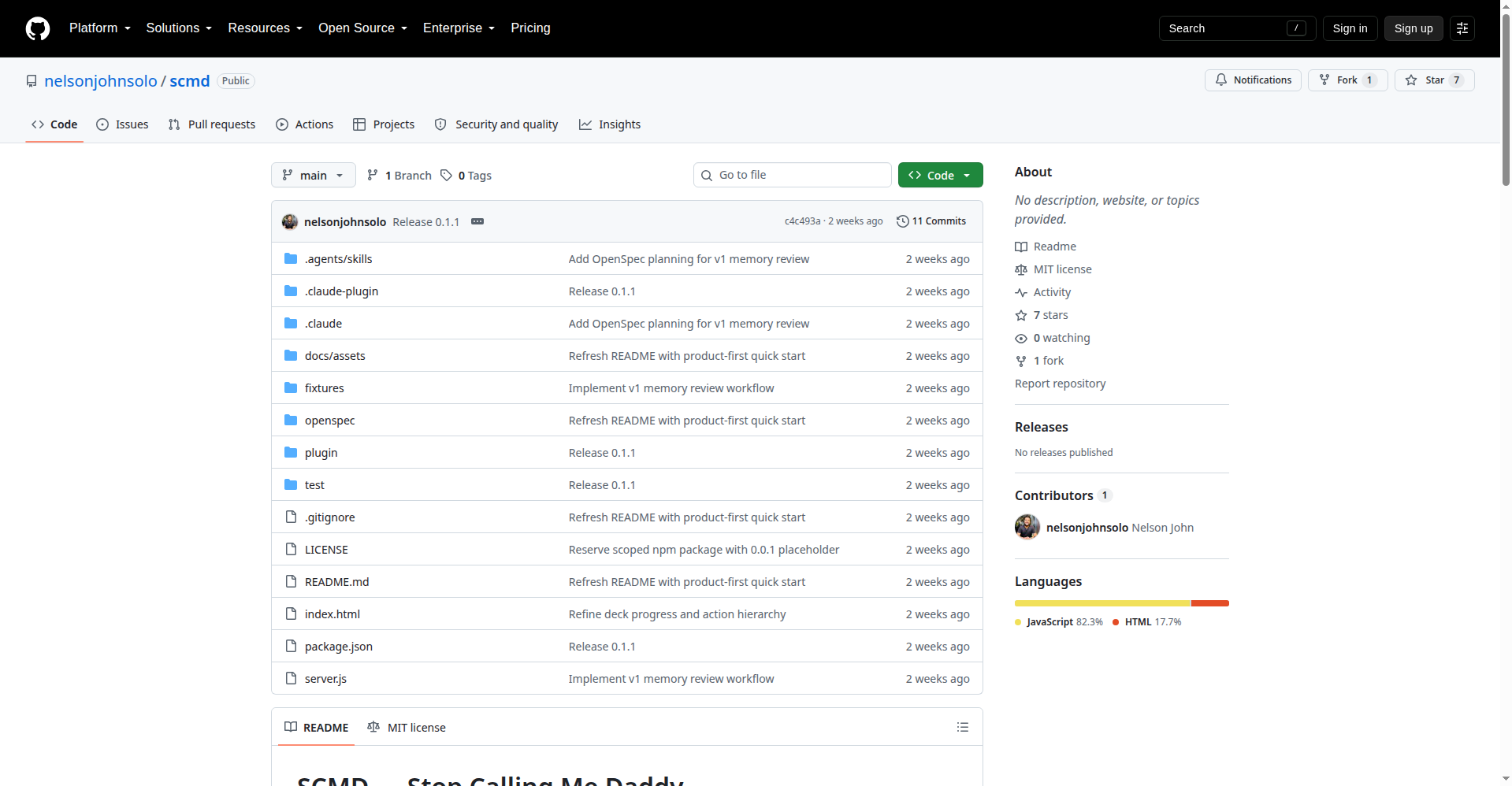
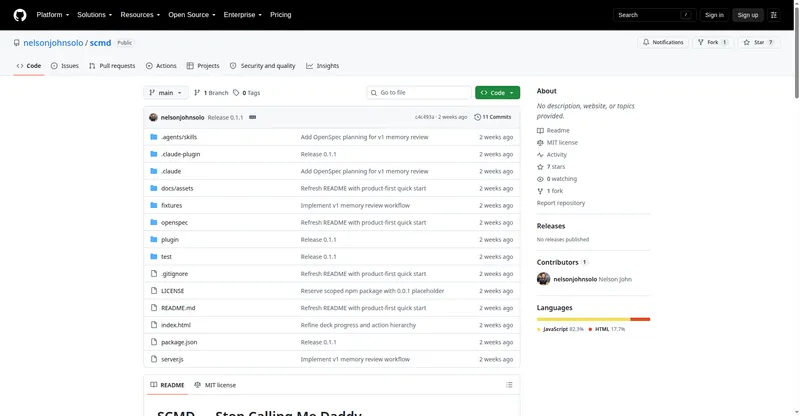
SCMD GitHub repository (MIT licensed)
1 / 3Overview
What is SCMD?
Manage what Claude Remembers and Keeps as Memory.
SCMD (Stop Calling Me Daddy) is a free, MIT-licensed open-source tool that gives Claude Code users a local review deck for the persistent memories Claude saves about them and their projects. It reads memory files from ~/.claude/projects and presents them as cards in a browser UI served from localhost, where you can mark each memory keep, delete, skip or undo; nothing is written until you confirm Apply, and confirmed deletions go to a restorable local trash. You can also see why a memory was saved by tracing it back to the session transcript, and rewrite a memory through your own local Claude Code CLI or by hand. Everything runs on your machine (127.0.0.1) with no telemetry and no cloud service. It needs Node.js 18+ and runs on macOS, Linux and Windows (Windows support is best-effort). Install via npx or as a Claude Code plugin.
Platforms and languages
SCMD Availability
Platforms
Languages
Capabilities
SCMD Key Features
Card-based memory review
Browse the persistent memories Claude Code saved as cards, filterable by project or memory type, with full-text search over memory text.
Staged decisions
Mark each memory keep, delete, skip or undo; decisions are staged in the browser and nothing is written until you confirm Apply.
Restorable trash
Confirmed deletions move memory files to a local trash folder, where they can be restored or purged permanently.
Memory provenance
Trace a memory back to the session transcript it came from, so you can see why it was saved.
Local rewrite, no telemetry
Rewrite a memory through your own local Claude Code CLI or edit it by hand; everything stays on your machine with no telemetry.
Best for
Who uses SCMD?
Developers using Claude Code
Audit and clean up the persistent memories Claude accumulates, preventing stale or unwanted memories from being reused
Plans and access
SCMD Pricing
Free
Common questions
SCMD FAQs
How does SCMD work?
It reads the memory files Claude Code stores under ~/.claude/projects and shows them as review cards in a local browser page. You decide keep, delete, skip or undo for each card, then confirm once to apply all decisions at once.
Is any of my data sent anywhere?
No. The local server only binds to 127.0.0.1, there is no telemetry and no cloud component. The only exception is when you explicitly ask for a rewrite, which is processed through your own logged-in Claude Code CLI.
Can I recover a deleted memory?
Yes. Confirmed deletions move the memory file to a local trash folder (~/.scmd/trash/), where you can restore it or purge it permanently.
How do I install it?
Via npx (package @nelsonjohnsolo/scmd) or as a Claude Code plugin started with /scmd:run. Requires Node.js 18 or newer.
What does it cost?
Nothing. It is MIT-licensed open-source software.
Reviews
See what the community thinks and share your experience.
—
Based on 0 ratings
Rating distribution
Community reviews
No reviews
No written reviews yet.