
Block's Dessa Explained: A Voice Model Trained Only on Speech, Plus 5 Tools to Try While You Wait
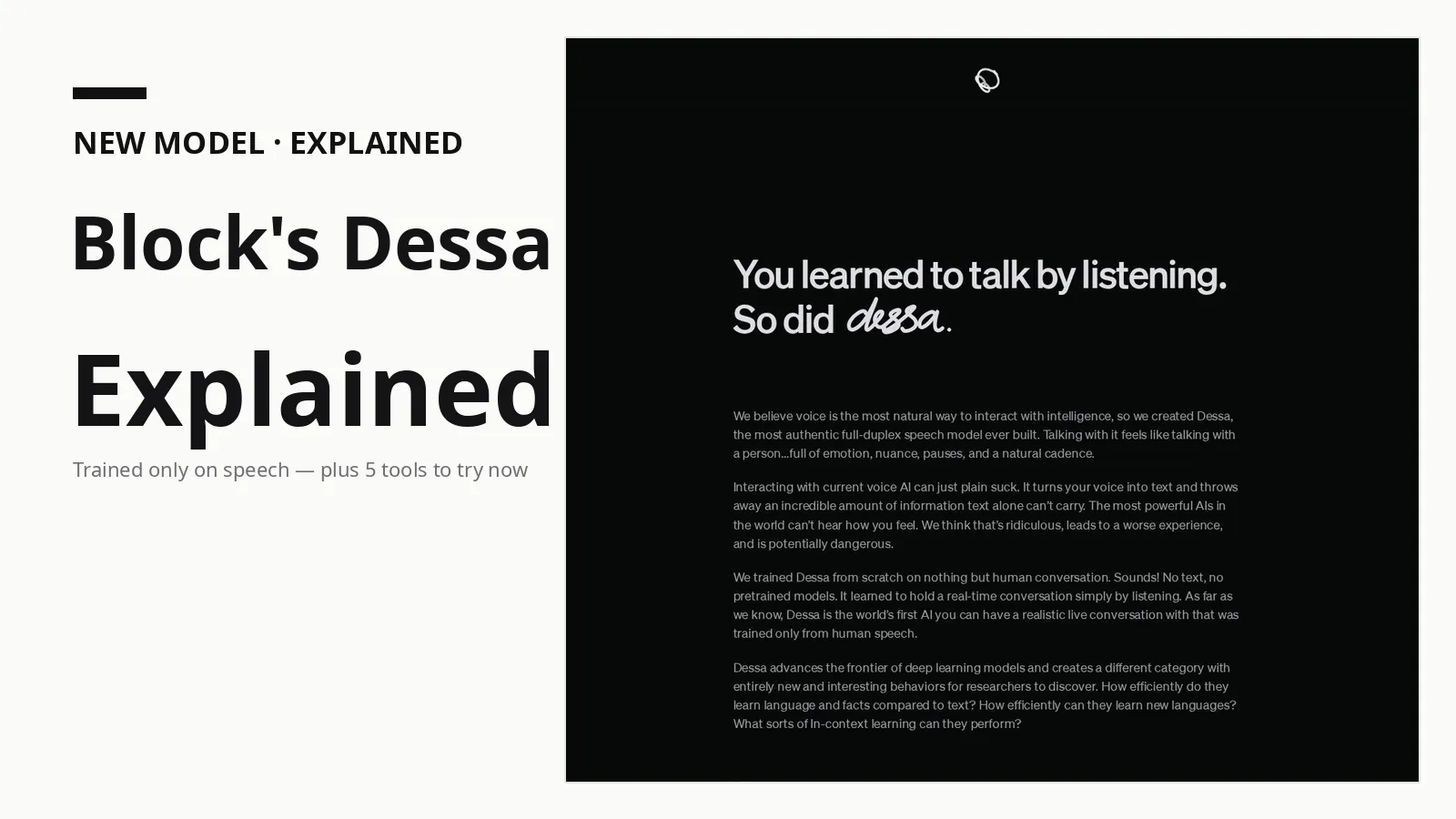
On October 23, 2026, a small research lab inside Block introduced a voice model with an unusual claim: it learned to talk without ever reading a word. Dessa was trained from scratch on human conversation alone, with no text and no pretrained model underneath it, according to Block. It listens and speaks at the same time, and, Block says, runs locally on a MacBook Pro with an M4 Max chip or better.
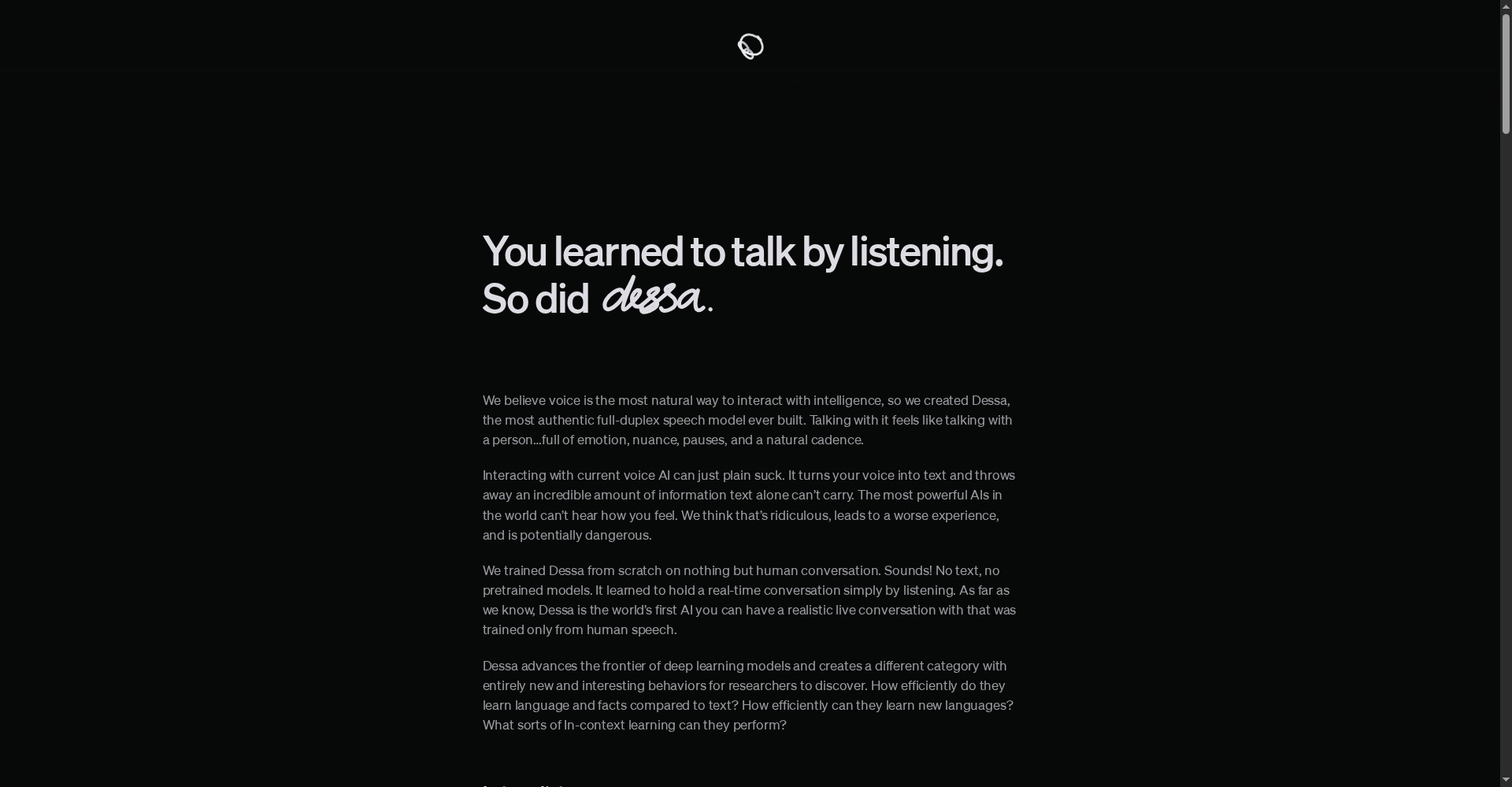
You cannot use Dessa yet. Block has published no API, no model weights, no price, and no public release date. Early access is going first to a small group of AI safety researchers, alongside a public waitlist. So this article does two things: it explains what Dessa is and what it is not, and it gives you five voice tools you can try today. None of those five runs Dessa; they are usable alternatives while Dessa stays behind a waitlist.
What happened
Block, the company behind Square and Cash App, published a page for Dessa on October 23, 2026, with recorded demo conversations and a post on X by Jack Dorsey, Block's cofounder and chairman. Dorsey called Dessa "the most authentic full-duplex speech model ever built." Ragavan Thurairatnam, who leads the lab, called the release "a GPT-3 moment for speech."
The lab reports directly to Dorsey and was founded by former members of Dessa, the Toronto deep learning startup that Square acquired in 2020. Coverage followed within a day: TechCrunch reported on October 24 that Dessa sounds eerily human, while CoinDesk reported that reactions split between amazement and worry that such a voice could make phone scams harder to detect.
Key features and changes
Most voice assistants today work in three steps: turn your speech into text, send the text to a language model, and turn the answer back into speech. Block argues that this pipeline throws away information only sound carries.
Dessa skips the text step entirely, according to Block. It is a speech-to-speech model, audio in and audio out, and it is full-duplex, meaning it listens and talks at the same time, the way people do on a phone call. Block says Dessa learned from real conversation when to cut in and when to backchannel, and that it natively hears and speaks emotion and laughter, with inference faster than real time.
Block also says Dessa learned language from hundreds of times fewer words than large language models see, and that the team trained it on a single NVIDIA GB200 NVL72 system. Both are Block's own account, not independently verified results: Block has published no paper, benchmark, or parameter count to check them against.
The demo recordings are the only public evidence so far. Block describes them as live recordings with subtitles added afterwards and nobody steering the model. In the clips, Dessa laughs mid-sentence, gets louder when asked to speak up, and finishes a person's sentence when they blank on a movie title. One recording has Dessa talking with GPT-Live-1, a third-party AI model whose developer, Block notes, has not reviewed or endorsed Dessa.
Block's "first" claim needs one qualification. Block writes that, as far as it knows, Dessa is the world's first AI you can have a realistic live conversation with that was trained only from human speech. That is narrower than "the first full-duplex voice model": Kyutai's Moshi already did full-duplex speech in 2024, but it started from a text model. Dessa's novelty is the training diet: speech alone.
Who it's for
Right now, Dessa is for a very small audience: the AI safety researchers Block is inviting to try it first, so they can find risks the team has not anticipated. The request form asks for a name and an institutional email. Everyone else can join a public waitlist, but Block has said nothing about when general access will arrive.
That makes Dessa more useful today as a signal than as a tool: a sign that speech-only training is being taken seriously, and a warning that the next generation of voice agents may sound far less robotic. If you simply want a voice assistant to talk to today, the five tools below are a better starting point.
Strengths and limits
Dessa's strengths, as presented by Block, are timing and feeling. A model that hears and speaks at the same time can interrupt, backchannel, and react mid-sentence, which is how real conversation works. A model trained only on speech does not need to translate feeling into text tags first, which may be why the demos sound less staged than a typical assistant reading a script aloud.
The limits are just as clear. There is no public access, no API, and no independent test of any of Block's claims. TechCrunch noted that it is not clear whether Dessa's emotion is steered by some kind of tags behind the scenes. The demos are selected by Block, and sounding human is not the same as being right.
Then there is the safety question that dominated the public reaction. CoinDesk reported that filmmaker Justine Bateman argued a humanlike voice could trick people into lowering their guard, while journalist Shiv Aroor warned that scam calls could reach a new scale. On the other side, Binance founder Changpeng Zhao pointed to education, saying natural voice interaction could help children learn through conversation. Block frames safety as one of its three reasons for building Dessa, and argues that a voice AI that cannot hear distress in a speaker's voice is itself a safety problem. A voice that hears emotion better could help in some settings and deceive in others.
Five voice tools to try while you wait
None of the tools below runs Dessa. Each one gives you something Dessa promises, in a form you can use now: a live conversation, an expressive voice, or a voice agent you can build and deploy.
1. ElevenLabs
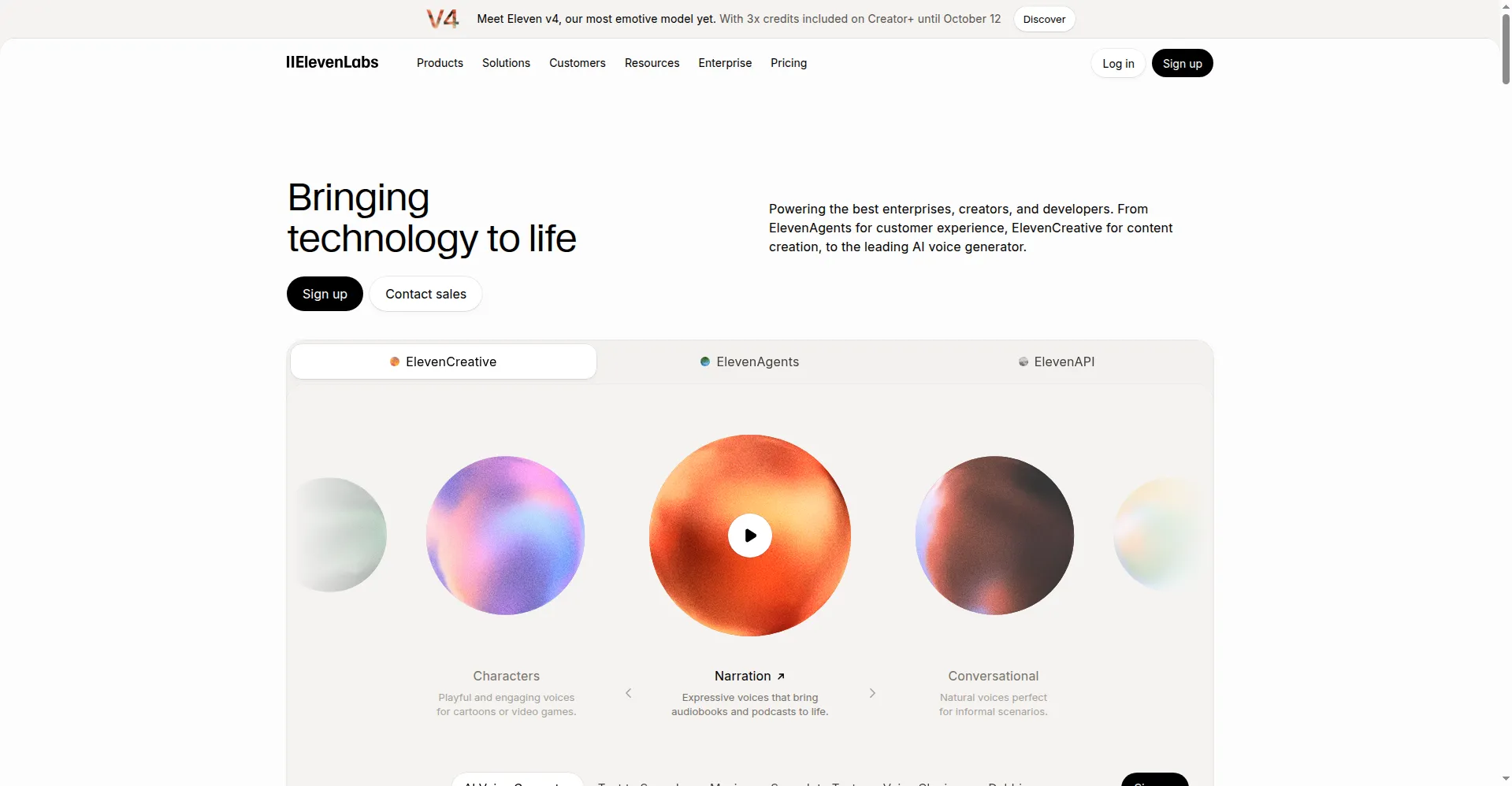
ElevenLabs is the most direct contrast to Dessa's approach. Where Dessa claims emotion is built into the model itself, ElevenLabs' conversational voice work, including its v4 models, uses voice tags to steer emotion, as TechCrunch noted. With ElevenLabs you can direct a voice explicitly, choosing tone and style, for narration, dubbing, or a conversational agent.
2. Fish Audio
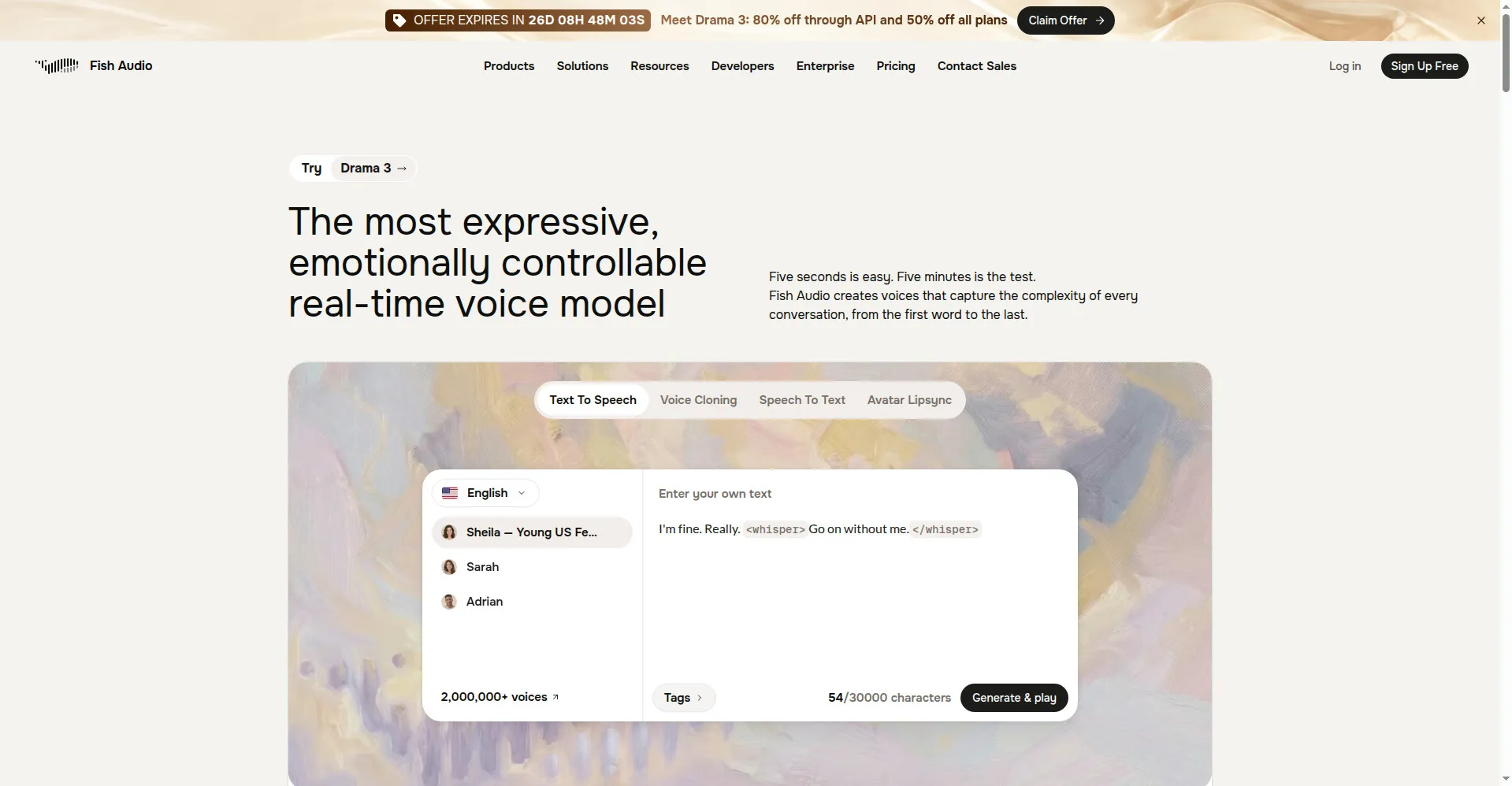
Fish Audio is an expressive voice generation platform, and its Drama 3 model was also cited by TechCrunch as an example of tag-driven emotion in speech. Choose it if your main need is expressive, characterful speech rather than a live conversation: dialogue or narration with a particular style.
3. ChatGPT
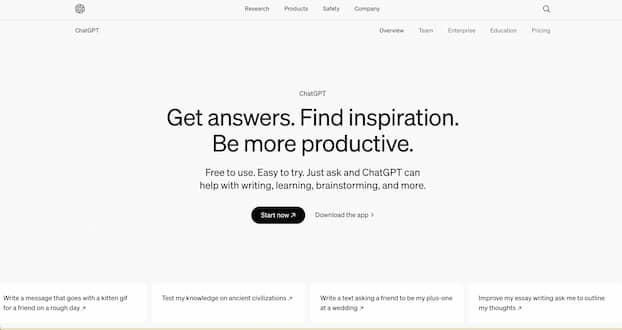
ChatGPT is the everyday way most people already talk to an AI out loud. Its voice mode lets you hold a spoken conversation with a general-purpose assistant, ask follow-up questions, and switch topics mid-chat, without any setup beyond the app. It is not a speech-only model like Dessa, and it is not a full-duplex research preview. Its advantage is the opposite: it is available now.
4. Moshi
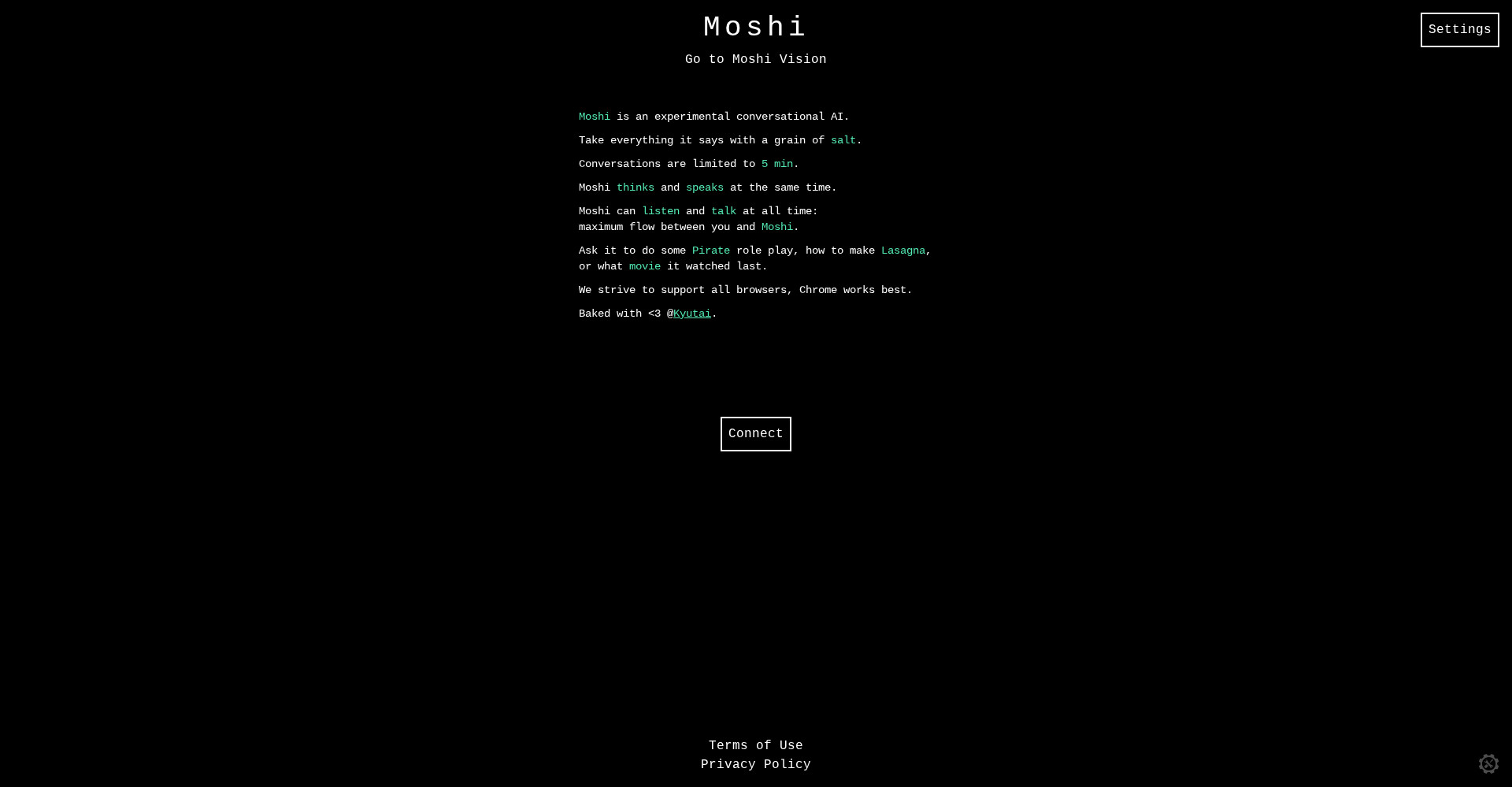
Moshi is the closest thing to Dessa that you can actually try. Built by Kyutai, a Paris-based open-science lab, Moshi is an open-weights, full-duplex speech model: it listens and speaks at the same time, generates audio directly, and can be interrupted mid-sentence. The key difference is its starting point: Moshi was built on top of a text model, while Dessa claims to have learned from speech alone. Try the browser demo, or run the open weights locally if you have a capable GPU.
5. Vapi
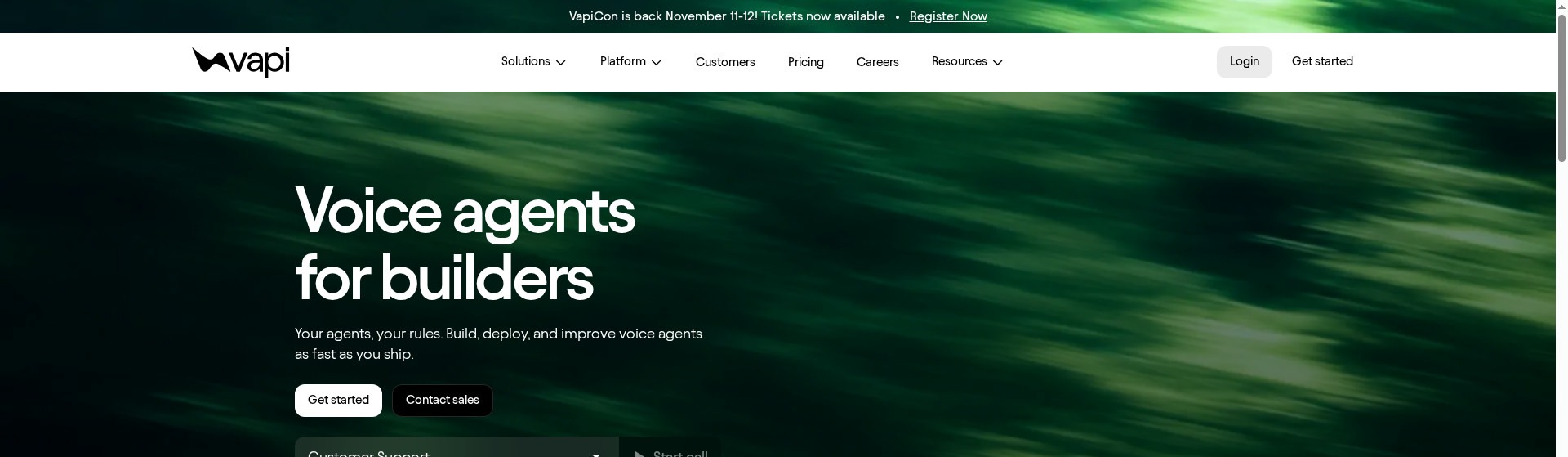
Vapi is for readers who want to build something, not just talk to something. It is a developer platform for voice agents that make and answer phone calls, letting you choose the speech recognition, language model, and voice provider, and connect the agent to your own tools and data. Where Dessa is a single model demo, Vapi is the plumbing: phone numbers, call handling, and transcripts, so a voice agent can book an appointment or answer a support call.
This list is not a ranking, and it is not a claim that these tools match Dessa. Dessa may turn out to be a genuine step forward, or its demos may flatter it.
How to start
If you are an AI safety researcher, Block's Dessa page has an early-access request form that asks for your name and an institutional email. If you are not, the public waitlist is the only official route, and Block has not announced a date for wider access. Be wary of anything else claiming to be Dessa: Block has released no app, download, or API.
For everyone else, pick one tool from the list that matches your goal: ChatGPT's voice mode for a general conversation, Moshi for a full-duplex experiment, ElevenLabs or Fish Audio for expressive speech, and Vapi if you want to build a phone agent. Try a short, real task, such as a five-minute conversation or a single booking flow.
Bottom line
Dessa is a genuinely interesting research result wrapped in a very early announcement. Block's claim, that a model can learn to converse from human speech alone, with no text and no pretrained model, is a real break from how voice AI is usually built, and the demos sound, at least in Block's own recordings, strikingly human in their timing and feeling. But a research preview with no API, no weights, no benchmarks, and no release date is not a product, and its most human qualities are also its most concerning ones.
Take Dessa seriously as a direction, and do not take its demos as proof. Join the waitlist if you are curious, watch for independent testing, and in the meantime, try the voice tools that are actually open today.
Sources
Block official site — block․xyz TechCrunch — techcrunch․com CoinDesk — coindesk․com Unite.AI — unite․ai