
Kimi K3.1 Pro Explained: 5 Ways to Use It
Moonshot AI has a new flagship, and it arrives with an unusual combination: near-frontier scores, a 1-million-token context window, and a promise to publish the full weights. Kimi K3.1 Pro, released on October 23, 2026, is the first model in the K3.1 series. This article explains what changed, what the benchmarks actually say, and five places you can already use the model.
What happened
Kimi K3.1 Pro is not a brand-new base model. According to Moonshot, it is a post-trained version of Kimi K3, rebuilt with substantially larger post-training compute, including joint reinforcement learning across hundreds of downstream domains.
The architecture is unchanged from K3: a mixture-of-experts design with 2.8 trillion total parameters and 104 billion active parameters per token, plus a context window of up to 1 million tokens (1,048,576 tokens, to be exact). It accepts text and image input, and video input through the API. Alongside it, Moonshot shipped Kimi K3.1 Pro Highspeed, which the company says delivers the same capabilities at two to three times the speed.
Both models are live now in the Kimi app, the Kimi Work desktop app (version 3.1.0 or later), Kimi Code, and the Kimi API, where they are listed as kimi-k3.1-pro and kimi-k3.1-pro-highspeed. The full model weights are promised by November 4, 2026, but the license has not been announced yet. Until then, it is open-weight in intent, not yet in artifact.
Moonshot also says it deliberately removed cyber-related data from mid-training and from its reinforcement learning environments before the open release, so the published weights would not extend the frontier of offensive hacking capability. On the company's in-house xdev-bench-hard test, the released model scores 81.0 percent at pass@3, against 90.5 percent for a checkpoint trained without the removal. That test is unpublished, so outsiders cannot yet check the claim.
Key features and changes
The headline improvement is agentic work: tasks where a model uses tools, runs commands, and carries a multi-step job through to completion. Moonshot's own numbers put K3.1 Pro at 65.7 percent on Terminal-Bench 4.0, a benchmark of realistic terminal tasks, against 66.4 percent for Anthropic's Claude Opus 5.5 and 58.2 percent for OpenAI's GPT-6 Astra. These figures are Moonshot's own, drawn from its own runs and rivals' published reports, not from one controlled experiment.
The rest of Moonshot's reported scores follow the same pattern. On BenchCAD, which rebuilds 3D objects as CAD code, K3.1 Pro scores 92.7 percent with tools, behind Opus 5.5 at 96.2 percent and GPT-6 Astra at 95.9 percent. On the company's internal Kimi Code Bench 3.0 long-horizon test, it reaches 61.2 percent, up from K3's 55.95 percent. Moonshot also claims a state-of-the-art 64.4 on OfficeQA Pro v2, an internal test of work over real financial documents.
The independent numbers point the same way. Artificial Analysis scores K3.1 Pro at 55 on its Intelligence Index, fourth overall out of 215 models, 11 points above K3's 44 and behind only Claude Opus 5.5 (58), Claude Sonnet 5.5 (56), and Muse Wonder Full (56). Once the weights ship, Artificial Analysis says, K3.1 Pro will be the highest-scoring open-weight model available, narrowing the open-to-closed gap from 12 points to 3. On GDPval-AA, a test of economically valuable work tasks, it reaches 1,846 Elo, third overall and 312 points above K3. AutomationBench-AA rises from 58 percent to 73 percent.
One discrepancy is worth stating plainly. Artificial Analysis's own Terminal-Bench 4.0 run puts K3.1 Pro at 67 percent, the highest score of any model it has tested, while Moonshot's own figure is 65.7 percent, just behind Opus 5.5. These are two different runs with different setups, so they should not be compared head to head.
On factual reliability, Moonshot reports that the claim-level hallucination rate on its internal Hallu Bench Hard stress test fell from 23.4 percent for K3 to 8.3 percent, though the company notes this test is deliberately built to trip models up, so the rate does not represent everyday error rates. Artificial Analysis's broader measurement is more modest: its hallucination rate falls from 53 percent to 44 percent while accuracy rises from 48 percent to 51 percent.
Pricing is part of the story too. The Kimi API lists K3.1 Pro at 2 dollars per million input tokens, 10 dollars per million output tokens, and 0.20 dollars per million cached input tokens, a 33 percent cut from K3's 3 and 15 dollars. The Highspeed variant is reported at double those rates. Because K3.1 Pro uses more output tokens per task, Artificial Analysis measures the cost per task at about 1.98 dollars, roughly the same as K3. The token price fell; the task price did not.
5 ways to use Kimi K3.1 Pro today
1. Kimi
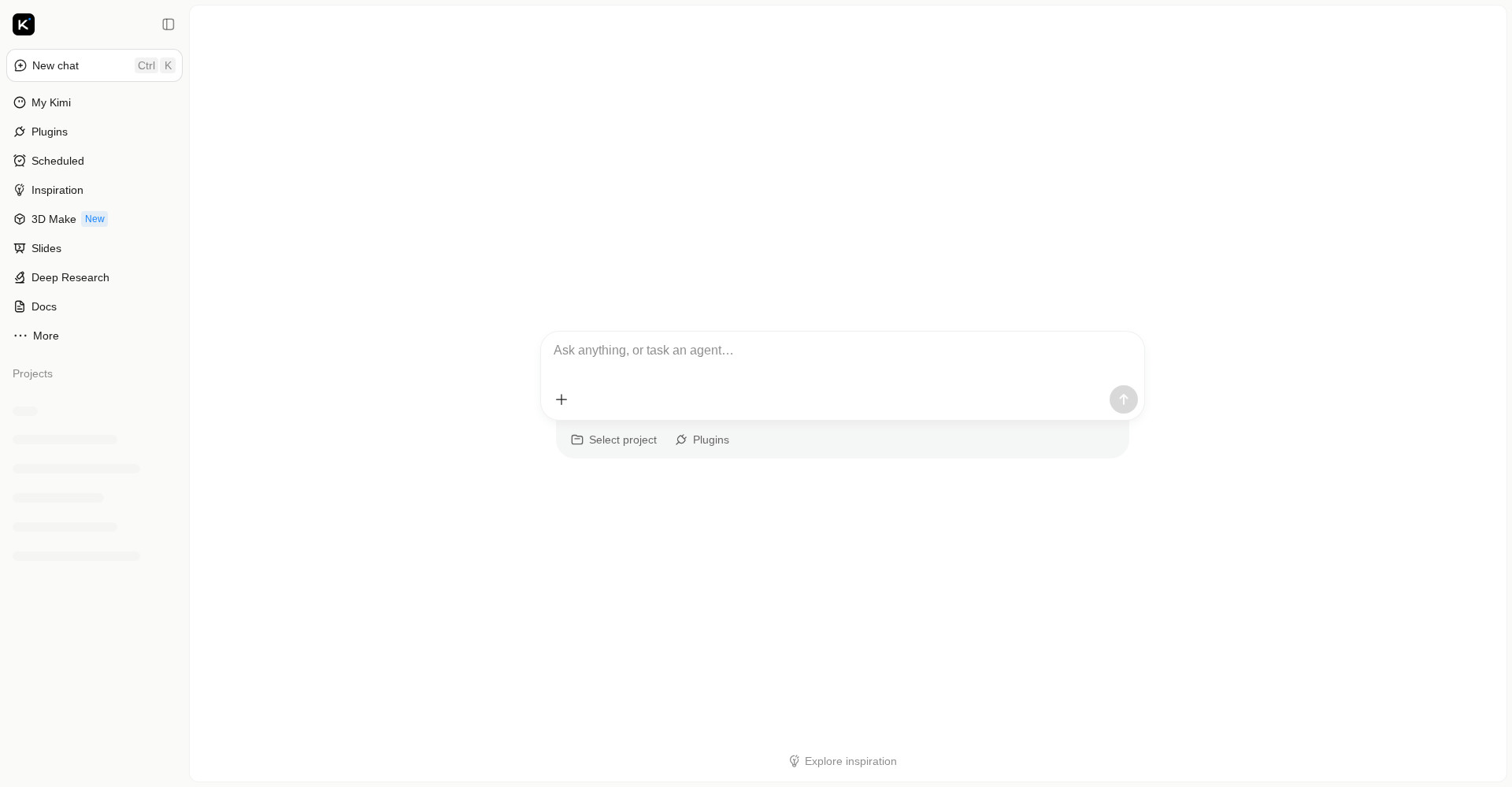
Kimi is Moonshot's everyday assistant on the web and on iOS, Android, and HarmonyOS, and the simplest way to try the new model. Open kimi.com, start a chat, and select K3.1 Pro. Beyond chat, Kimi includes Deep Research for multi-step reports, Slides for presentations, Docs for long documents, and 3D Make, which turns a text description, sketch, or reference image into a 3D model you can preview, edit online, and download for 3D printing. Kimi is free to start, with paid tiers that raise limits and unlock the newest models.
2. Kimi Code
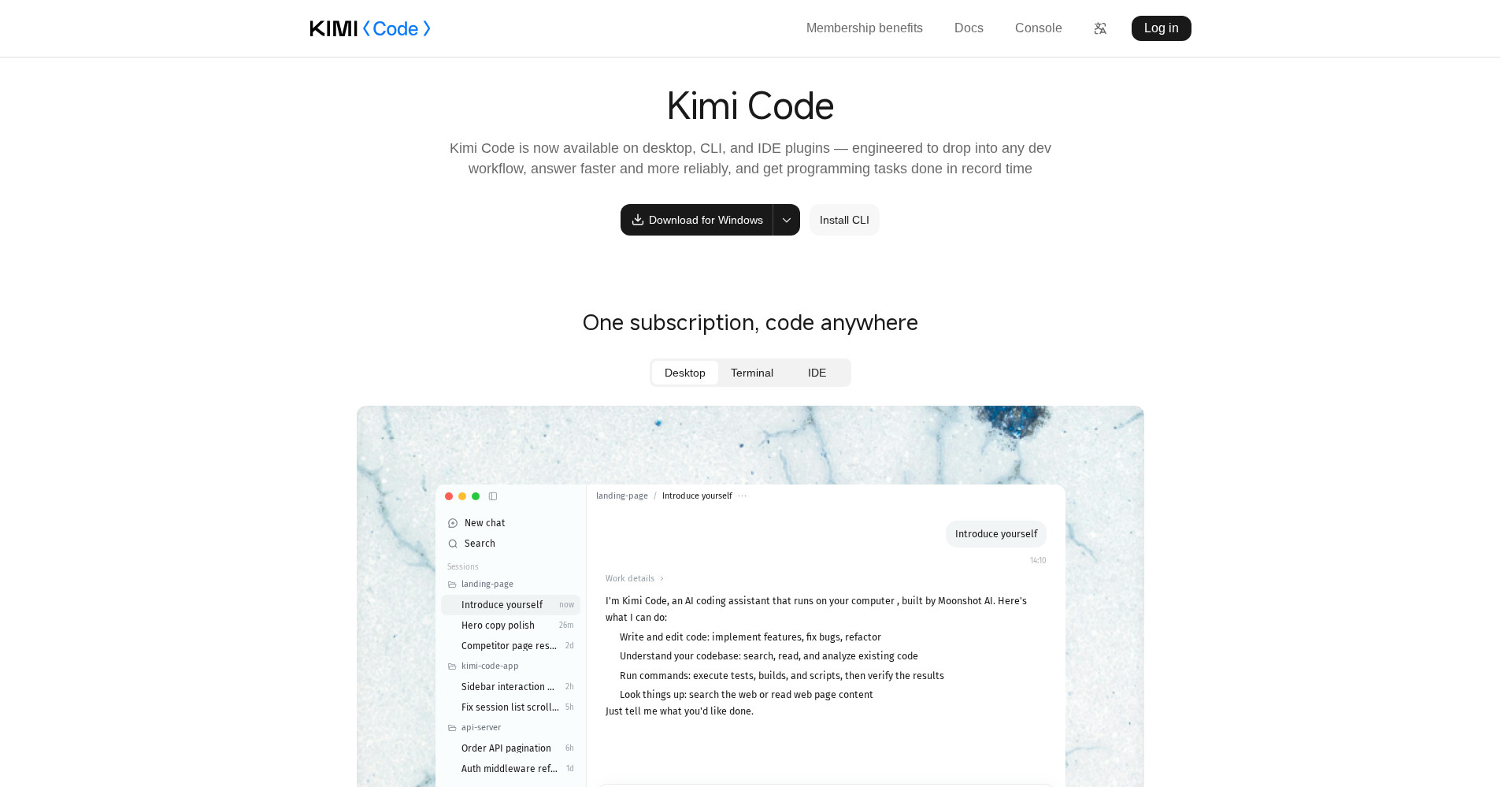
Kimi Code is Moonshot's coding agent, and it is where K3.1 Pro's agentic strengths matter most. It runs as a desktop app, a terminal CLI, and IDE plugins under one membership, writes and edits code, searches and analyzes existing codebases, and runs commands such as tests and builds, then verifies the results. Select the model with the /model command. Note two constraints from the documentation: K3.1 Pro runs in thinking mode only, and under current plans it requires Plus membership or above, with the full 1-million-token context reserved for Pro members and above.
3. Kimi Work
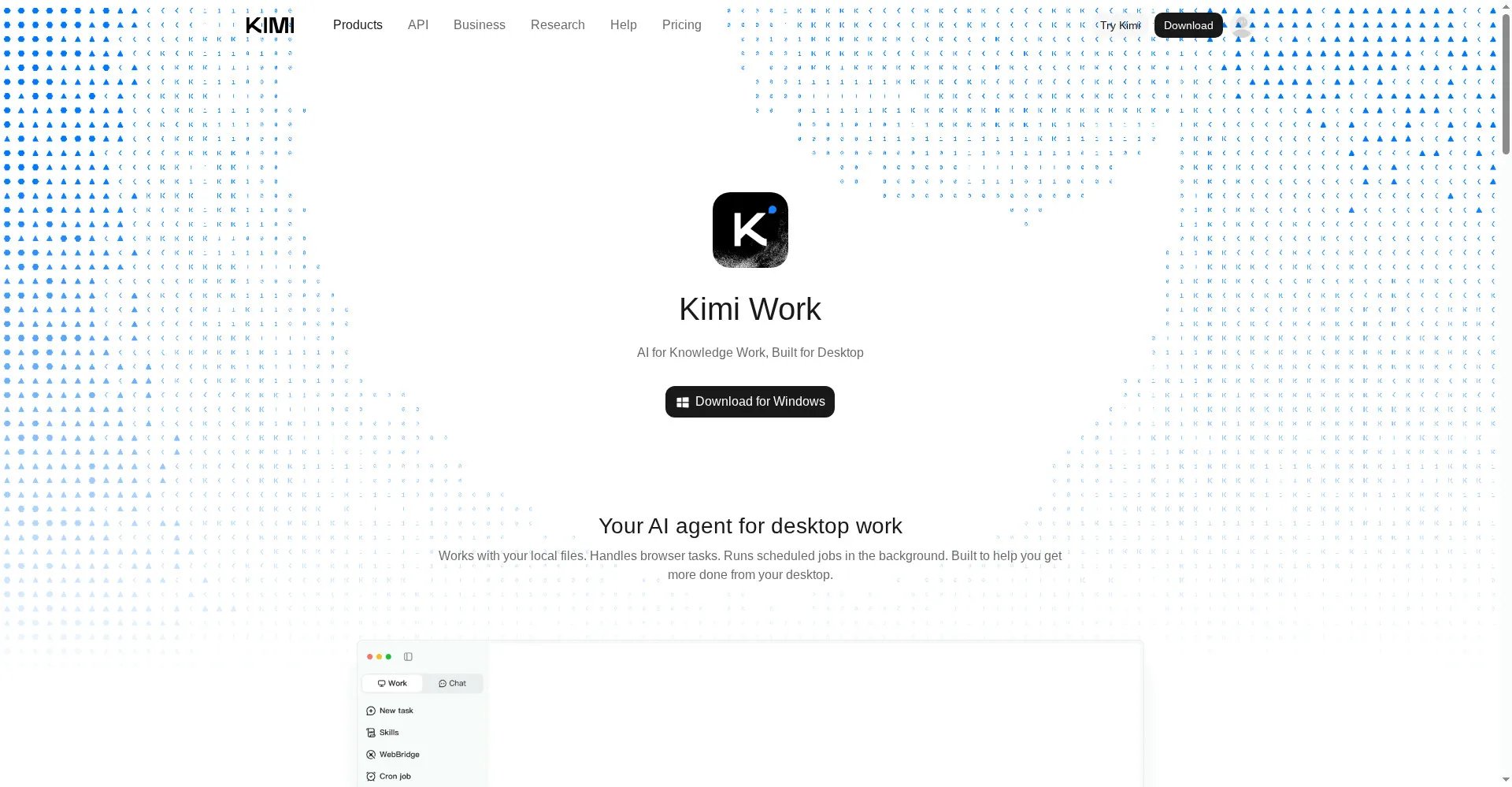
Kimi Work is the desktop agent for knowledge workers, available for Windows and Apple silicon Macs. It works with local files, handles browser tasks, and runs scheduled jobs in the background, so work continues from the desktop instead of inside a browser tab. Kimi Work runs K3.1 Pro starting with app version 3.1.0, and it is the right pick if your work is documents, research, and recurring desktop jobs rather than code.
4. OpenRouter
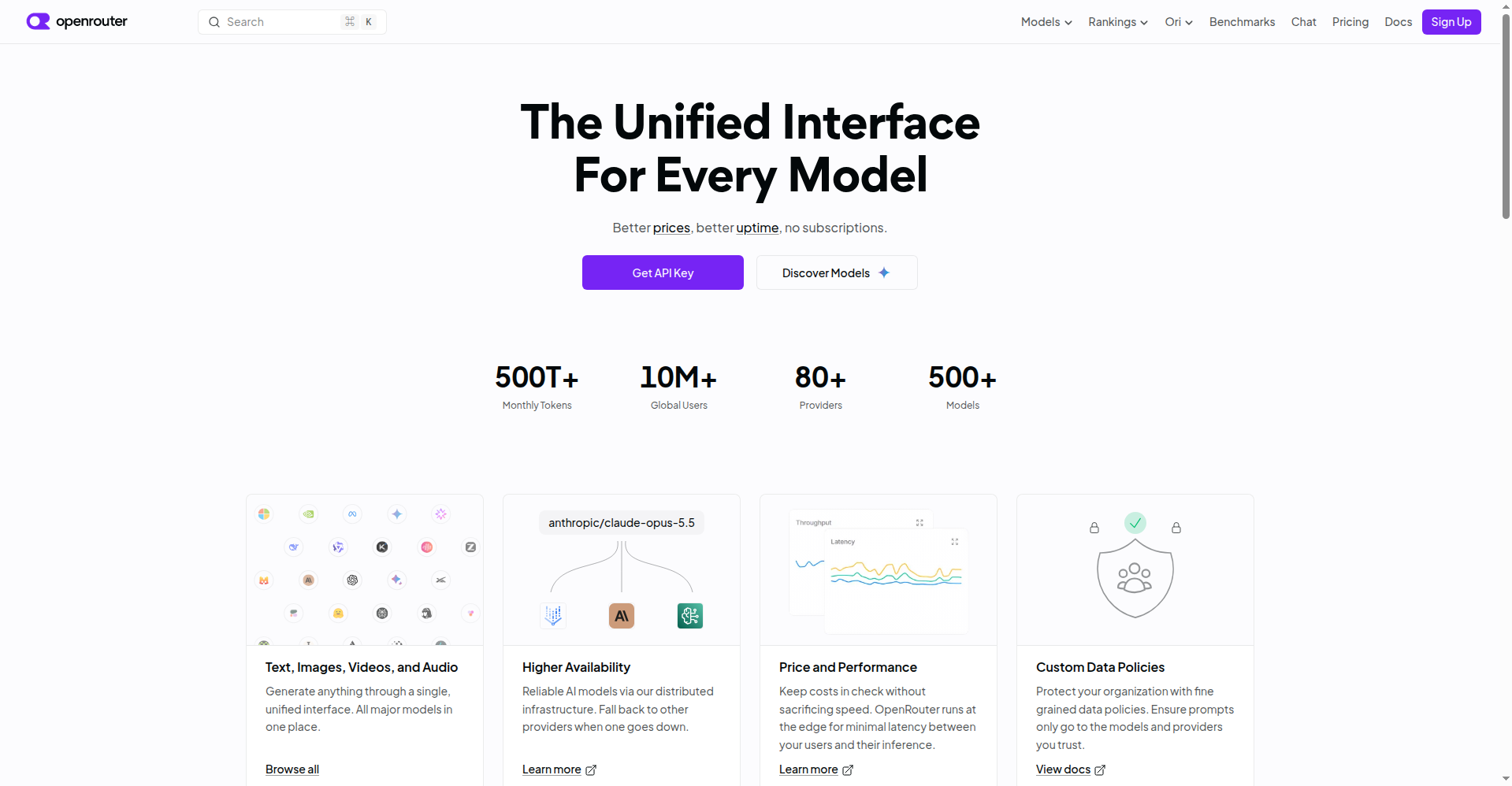
OpenRouter added Kimi K3.1 Pro on launch day, October 23, 2026, under the model ID moonshotai/kimi-k3.1-pro, served by Moonshot at the same 2-dollar input and 10-dollar output rates. OpenRouter is the pragmatic choice if you already route through one API: call K3.1 Pro alongside dozens of other models with one key, and switch away without rewriting your integration.
5. Vercel AI Gateway
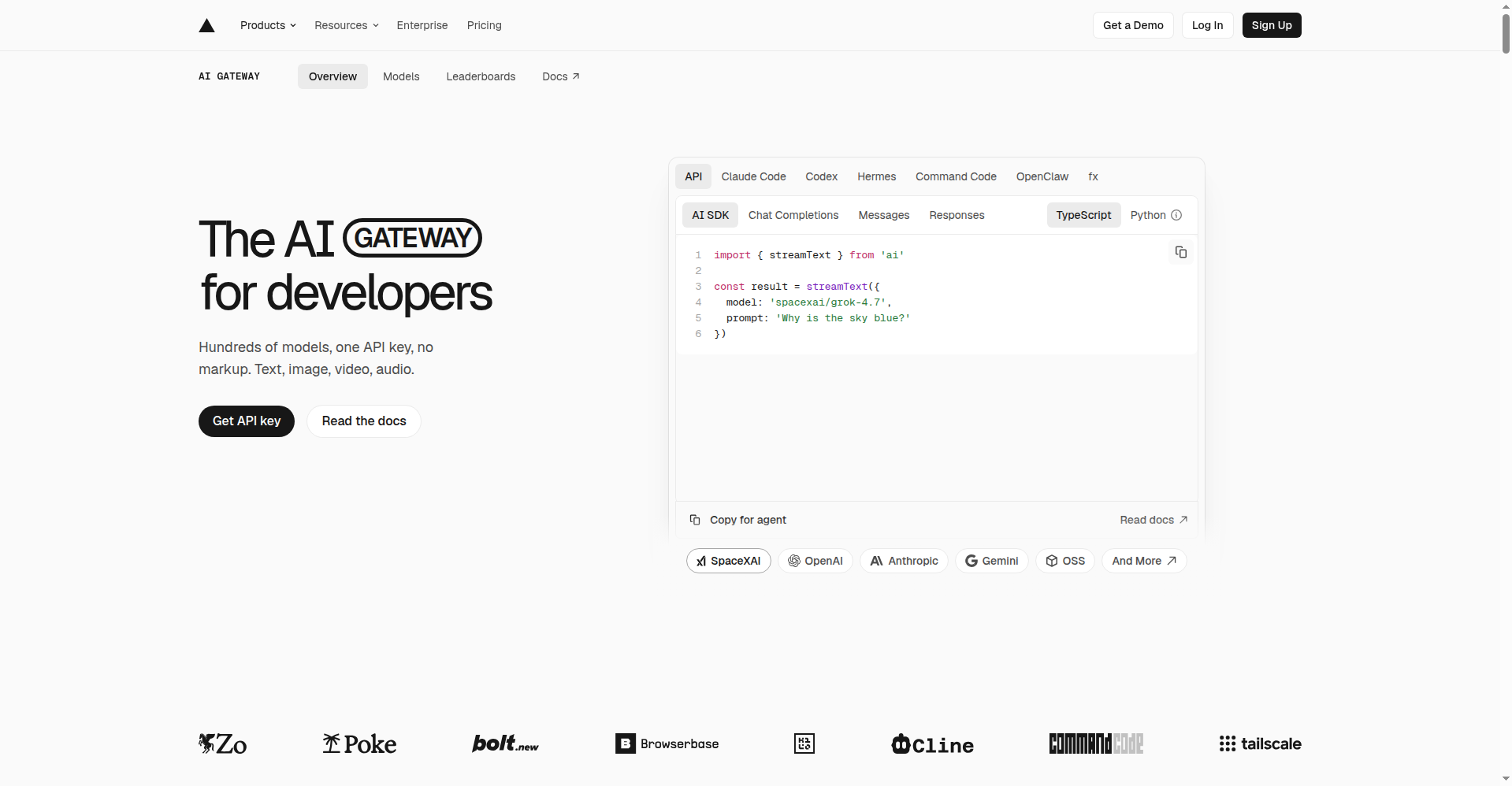
Vercel AI Gateway added both Kimi K3.1 Pro and Kimi K3.1 Pro Highspeed, plugging the model into the single LLM router many Next.js projects already use. If you build front-end products on Vercel, this is the lowest-friction route: add the model to your existing gateway setup, pick the Highspeed variant for interactive features, and keep the standard model for longer background jobs.
Who it's for
Kimi K3.1 Pro fits three groups best. Developers building coding agents and long-horizon automation get the strongest reason to try it: the Terminal-Bench and GDPval-AA results, from both Moonshot and Artificial Analysis, place it at the frontier for tool-using work. Teams doing 3D and CAD-style work get a second reason, through BenchCAD and the 3D Make feature. Finance and research teams get a third, via the OfficeQA Pro v2 result, but that is Moonshot's own benchmark, so treat it as promising rather than proven.
It is a weaker fit elsewhere. If your work leans on science reasoning, Moonshot's own chart puts K3.1 Pro well behind GPT-6 Astra on Terminal-Bench Science, so this is a coding-and-agents model, not an all-rounder. And if you need to self-host today, you cannot: the weights are not out yet.
Strengths and limits
The strengths are concrete: effectively frontier-level agentic coding at a third less per token than its predecessor, with a 1-million-token context window few rivals match, available now across chat, desktop, coding, and API surfaces.
The limits deserve equal weight. Every headline benchmark except Artificial Analysis's index score comes from Moonshot itself, and the Terminal-Bench figures differ between the two runs. The weights, the license, and independent runs of the downloadable model are all still pending, and the cyber-capability removal is unverifiable until the unpublished test and the weights are public. The cost per task has not fallen even though the price per token has, because the model writes more tokens to get its results.
How to start
Pick your surface and start small. For a first taste, open Kimi on the web and ask it to do a multi-step job, such as researching a topic and building slides. For coding, install Kimi Code, start a new session with K3.1 Pro, and give it a bounded task, such as implementing a feature, so you can check its work first. For production use, call the API as kimi-k3.1-pro, keep reasoning effort at max for hard tasks, and watch output token counts, since they drive the real cost.
Bottom line
Kimi K3.1 Pro does not need hype to be interesting. A post-training pass took the same 2.8-trillion-parameter model from 44 to 55 on an independent index and put it third on economically valuable agentic work. The open question is whether the weights, the license, and independent reproductions arrive as promised. Until November 4, the smart move is to try it through Kimi, Kimi Code, or an aggregator, measure it on your own tasks, and keep the frontier claims with the vendor, not yet the field.
Sources
Unite․AI — unite․ai Artificial Analysis — artificialanalysis․ai OpenRouter — openrouter․ai iMasters — imasters․com