
Microsoft's 7 MAI Models Explained: The Price-Performance Play — and 5 Places You Can Actually Use Them
On November 17, 2026, Microsoft AI launched seven models in a single day at Ignite 2026 in San Francisco. The family covers coding, security, image editing, live voice, transcription, and model routing — all on the same pitch: near-frontier quality at a fraction of the price.
The two coding models are the ones most developers will meet first. MAI Code 2 and MAI Code 2 Flash are already in GitHub Copilot, and Microsoft says Code 2 delivers 98% of GPT-6.1 Sol's coding performance at about 40% of the cost, and 96% of Claude Opus 5.5's at about 5%. Those numbers are striking — and they come with footnotes: the cost comparison uses a promotional price that ends on May 17, 2027, and the benchmarks are Microsoft's own.
Seven models, one price-performance bet
Microsoft counts seven models in the launch, each with a headline claim:
| Model | What it does | Microsoft's headline claim |
|---|---|---|
| MAI Code 2 | Everyday enterprise coding | 98% of GPT-6.1 Sol at about 40% of the price |
| MAI Code 2 Flash | High-volume routine coding | Comparable to GPT-6 Luna at 65% of the price, Claude Haiku 5.5 at 20% |
| MAI Cyber 2 Flash | Security monitoring agents | Beats GPT-6 Astra on CyberGym-E2E at under 2% of the cost per task |
| MAI Image 2.7 | Image editing and generation | No. 1 on Artificial Analysis image editing |
| MAI Realtime 1 | Live speech-to-speech | Beats GPT-Realtime 2.1, from $0.01 per audio minute |
| Dragon Copilot Transcribe | Clinical transcription on MAI Transcribe 2 | 10 million patient encounters a month, error rates halved |
| Decision 1.1 | Routes requests to bigger models only when needed | 50x faster and 79x cheaper than GPT-6.1 Sol |
Two announcements sit alongside the models. Maia 200, Microsoft's second-generation AI accelerator, is now in production running the company's largest models, at 1.7x more tokens per watt than its predecessor, according to Microsoft. And MAI Licensed Weights lets enterprises customize a frontier MAI model with their own data and run it inside their own Azure environment.
The strategy behind the family is not subtle. Microsoft has spent years paying OpenAI and Anthropic every time someone used GitHub Copilot or its other AI products. These models are its way out: in-house alternatives, priced aggressively, distributed through products Microsoft already owns — GitHub, Visual Studio, and Azure.
MAI Code 2: the coding flagship, in Microsoft's own numbers
MAI Code 2 is built for the coding work teams do every day: taking code to production, debugging, multi-file implementation, refactoring, repository-wide reasoning, and UI work. Microsoft says it was also tuned to generate dashboards and visualizations, and in a blind side-by-side evaluation of frontend work, developers preferred its output over GPT-6 Sol 64% of the time.
Microsoft scored Code 2 at maximum reasoning effort on four agentic coding benchmarks, against GPT-6.1 Sol and Claude Opus 5.5:
| Benchmark | MAI Code 2 | GPT-6.1 Sol | Claude Opus 5.5 |
|---|---|---|---|
| DeepSWE 1.1 | 73.2% | 74.6% | 69.0% |
| Terminal-Bench 2.1 | 84.6% | 85.0% | 78.7% |
| SWE-Atlas | 43.1% | 47.4% | 57.5% |
| FrontierCode v1.1 | 52.0% | 49.4% | 56.0% |
| Average | 63.2% | 64.1% | 65.3% |
Read the bottom row first. Code 2 does not win on average against either rival. It beats Opus 5.5 on two tests and loses on two, and it beats GPT-6.1 Sol on just one — FrontierCode. On SWE-Atlas, which tests codebase questions, test writing, and refactoring, Opus leads it by more than 14 points. The honest reading is that Code 2 is close, not better.

The smaller model makes the stronger showing. MAI Code 2 Flash, designed for high-volume work such as code explanations, targeted edits, and routine fixes, averaged 61.0% across three of the benchmarks, ahead of GPT-6 Luna at 55.1% and Claude Haiku 5.5 at 53.9%, according to Microsoft's figures as reported by InfoWorld. On Terminal-Bench 2.1 it scored 78.3%, nine points clear of Luna.
Three caveats matter, and Microsoft is upfront about one of them. First, the company says Code 2 is explicitly not yet tuned for harder problems, such as fundamental science research or very long-horizon agentic work — so this is a model for everyday enterprise coding, not a frontier generalist. Second, three of the four benchmarks ran on Microsoft's internal MSBench platform, and no independent validation had been published at launch. Third, the comparison aged fast: OpenAI shipped GPT-6.2 Sol into GitHub Copilot the same day, and Microsoft's announcement includes no head-to-head with it.
The price tag has an expiry date
The cost side of Microsoft's claim deserves the closest look, because it is where the headline numbers are most misleading. Microsoft's own cost-per-task figures put MAI Code 2 at $0.309 per task, against $0.761 for GPT-6.1 Sol and $6.306 for Claude Opus 5.5. Flash comes in at $0.052 per task, against $0.080 for GPT-6 Luna and $0.319 for Claude Haiku 5.5. All of those figures are vendor-reported, and all were calculated at a 50% promotional price. GitHub's pricing page lists the actual rates, including cached input at $0.025 for Code 2 and $0.005 for Flash during the promotion. Every rate exactly doubles when the promotion ends:
| Model (per 1M tokens) | Input, promo | Output, promo | Input, after May 17, 2027 | Output, after May 17, 2027 |
|---|---|---|---|---|
| MAI Code 2 | $0.50 | $2.50 | $1.00 | $5.00 |
| MAI Code 2 Flash | $0.05 | $0.25 | $0.10 | $0.50 |
Do the arithmetic at list price and the story changes. If Code 2 uses the same number of tokens per task, its 31-cent task becomes roughly 62 cents — about 81% of GPT-6.1 Sol's figure rather than 40%, and about 10% of Opus 5.5's rather than 5%. Flash's 5.2 cents becomes about 10.4 cents, above GPT-6 Luna's 8 cents if the rival's price does not move. The headline claims — "98% of GPT-6.1 Sol at 40% of the price" and "96% of Opus 5.5 at 5% of the price" — are promotional-price claims, and they should be read that way.
The practical advice follows from that. Treat the next six months as a trial at half price, and budget at the list price. Any team that standardizes on Code 2 should run its own tasks at both rates before May 2027 — vendor benchmarks, including these, are not a substitute for that.
Five places you can actually use them
The family is not a research preview. Most of it is already inside products you can open today.
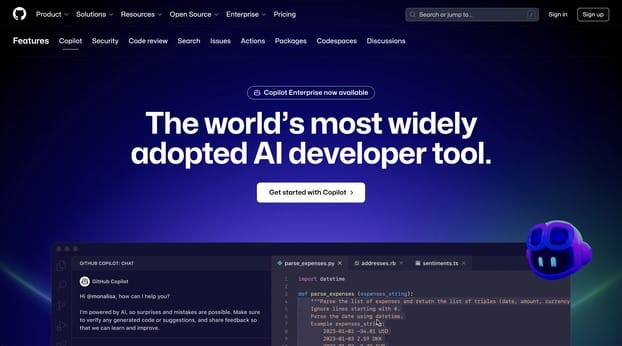
1. GitHub Copilot — the coding models. Both coding models are in the Copilot model picker in VS Code, Visual Studio, Copilot CLI, the cloud agent, github.com, GitHub Mobile, JetBrains, Xcode, and Eclipse. MAI Code 2 is available on Copilot Pro, Pro+, Max, Business, and Enterprise plans; Flash is on those plans plus Free and Student, which makes it the easiest way to try the family without paying. GitHub lists a 1 million token context window for both models, offered in VS Code and Copilot CLI only. Note for admins: new models are switched on by default unless disabled in the model policy.
2. Microsoft Foundry — the API route. Flash is also in a limited-access preview in Microsoft Foundry, and the platform is where the rest of the family lives for developers: MAI Image 2.7 and Image 2.7 Flash are available there, and Decision 1.1 is generally available. Foundry's model router now covers the top 50 Foundry models, so Decision 1.1 can send requests to larger, pricier models only when a task needs them.
3. OpenRouter and Vercel — Decision 1.1 beyond Azure. Decision 1.1 is generally available on OpenRouter and Vercel as well as Foundry, which makes it the easiest member of the family to try outside Microsoft's cloud. Microsoft says it leads the Artificial Analysis Decision Index, is used by 4,000 customers, and is 50x faster and 79x cheaper than GPT-6.1 Sol — vendor-reported figures, as with everything else in this launch.
4. Dragon Copilot — transcription in the clinic. Dragon Copilot Transcribe, built on MAI Transcribe 2, is already live in Dragon Copilot, powering all doctor-patient conversation transcriptions there. Microsoft says it covers 10 million encounters a month, halves error rates in multilingual workflows, and is in the hands of a third of US physicians.
5. MAI Labs — the voice model tryout. MAI Realtime 1, Microsoft's first live speech-to-speech model, can be tried in MAI Labs. Microsoft says it outperformed GPT-Realtime 2.1 across its external and Dynamics 365 benchmarks, and prices it from $0.01 per audio minute. MAI Cyber 2 Flash is aimed at security teams: Microsoft says it scores 92.3% on the CyberGym-E2E benchmark against 91.5% for GPT-6 Astra, at under 2% of the cost per task. Reports say it will replace the existing model for eligible MDASH security customers starting in mid-December.
Who should switch now, and who should wait
Switch now if your work matches what these models were built for. If your team spends most of its Copilot usage on explanations, small fixes, routine reviews, and everyday feature work, MAI Code 2 Flash is the obvious first move — it is on the Free plan, it beats its lightweight rivals on Microsoft's own benchmarks, and the volume is where the savings actually land. On a paid plan, Code 2 is worth trying for the same everyday work during the promotional window, especially for frontend and dashboard work, where Microsoft's blind evaluation favored it.
Wait — or at least keep a frontier model in the picker — if your work is long-horizon agentic coding, research-grade problems, or the hardest debugging sessions. Microsoft says so itself: Code 2 is not yet tuned for those. And do not build a budget on the promotional rates. The honest price of MAI Code 2 is $1.00 per million input tokens and $5.00 per million output tokens, starting May 17, 2027. Plan at that price, and let the discount be a bonus rather than the business case.
Sources
- Seven new world-class models at scalable price-performance — microsoft․ai
- At Ignite, Microsoft Makes the Case for Good Enough Coding Models — devops․com
- MAI Code 2: Microsoft's Ignite Coding Model, Pricing and Benchmarks — letsdatascience․com
- Microsoft Launches Seven MAI Models at Ignite 2026 — infoworld․com