A local CLI and MCP server that sets up domains, hosting, databases, email, and payments for a new app in about an hour.
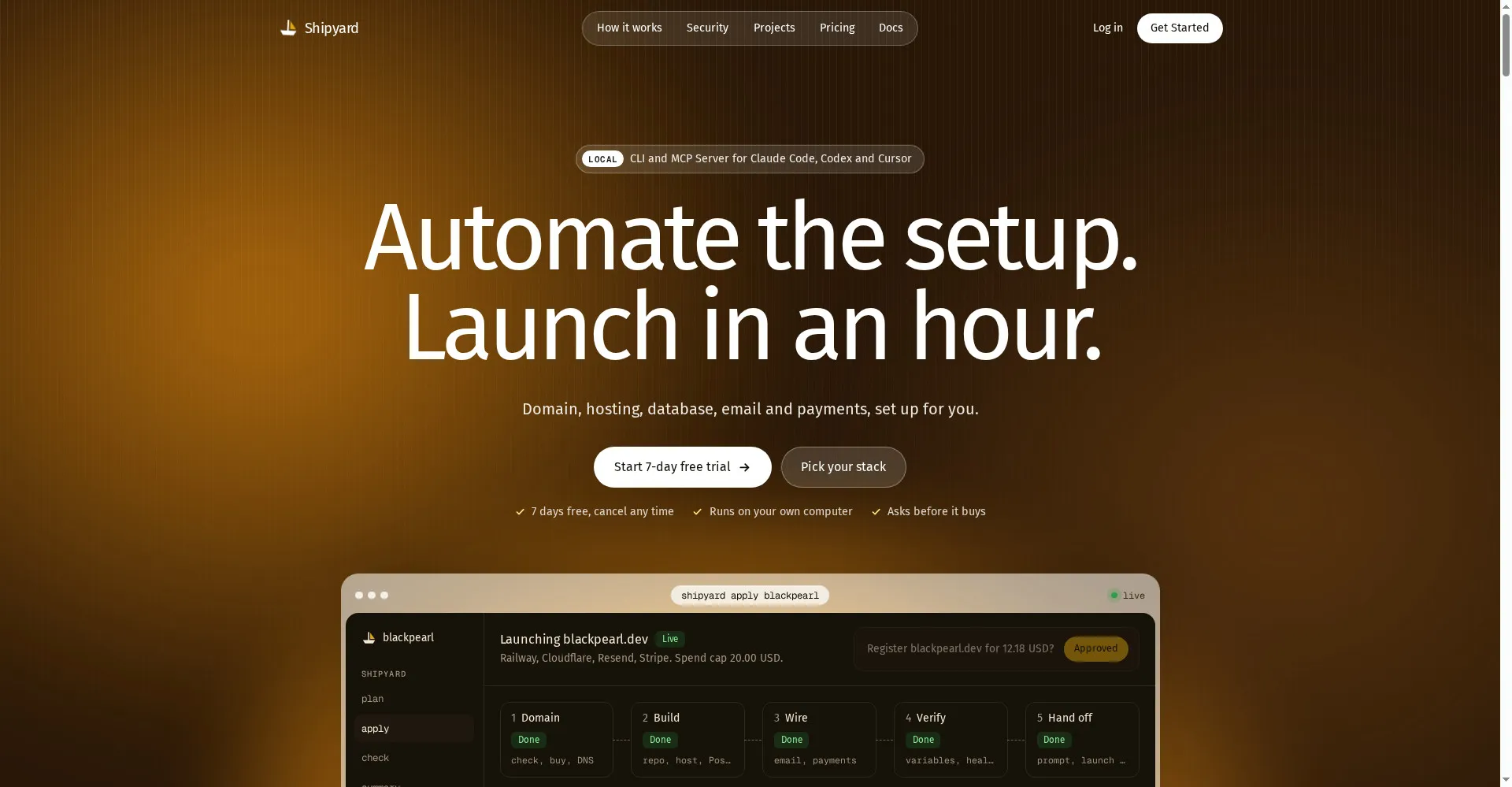
Shipyard homepage
1 / 2Overview
What is Shipyard?
MCP for Claude, Cursor and Codex to Automate Integrations
Shipyard is a local CLI and MCP server for Claude Code, Cursor, and Codex, built for the vibe-coding era. Connect your accounts once, and every new product gets its domain, DNS, hosting, database, email, and payments set up automatically in about an hour, across about 16 ordered steps. It plans before it acts, showing all resources and prices Terraform-style, and asks for confirmation before buying a domain. Your API keys stay in your machine's keychain, never on a server, and outputs are redacted. Failed runs are idempotent and resumable from where they stopped, and Shipyard writes a build prompt matched to your real stack. Pricing is $50 per launch, $299 a month, or $2,500 lifetime, with a 7-day free trial.
Platforms and languages
Shipyard Availability
Platforms
Languages
Capabilities
Shipyard Key Features
One-hour launch
Domain, DNS, hosting, database, email, and test-mode payments are configured automatically in about 16 steps.
Local CLI and MCP server
Runs inside Claude Code, Cursor, and Codex, with a browser-based setup interface.
Plan before apply
Shows every resource and price before creating anything, and confirms before buying a domain.
Keys stay on your machine
API keys live in the system keychain, are never uploaded, and are redacted from outputs.
Idempotent and resumable
A failed run resumes from where it stopped and produces a build prompt for your real stack.
Best for
Who uses Shipyard?
Indie developers who ship many small products
Set up domains, hosting, databases, and payments for a new app in about an hour
Plans and access
Shipyard Pricing
Paid
$50 per launch, $299/month, or $2,500 lifetime. 7-day free trial.
Common questions
Shipyard FAQs
Where do my API keys go?
They stay in your machine's keychain and are never written to files, repos, or servers.
Can Shipyard spend money without asking me?
No. Every purchase shows its price and waits for your confirmation, and there is a per-launch spending cap.
What happens if a setup fails halfway?
Setups are idempotent and resumable, so you can continue from where the run stopped.
Is Shipyard a template?
No. It configures real infrastructure for your actual stack rather than copying a template.
How do I undo a launch?
Shipyard lists everything it created and deletes it after you confirm by typing the project name; it never deletes a domain.
Reviews
See what the community thinks and share your experience.
—
Based on 0 ratings
Rating distribution
Community reviews
No reviews
No written reviews yet.