
Apple’s "Welcome Home" Event: HomeView, HomePod mini 2, and Apple TV 4K Give Siri AI a Body
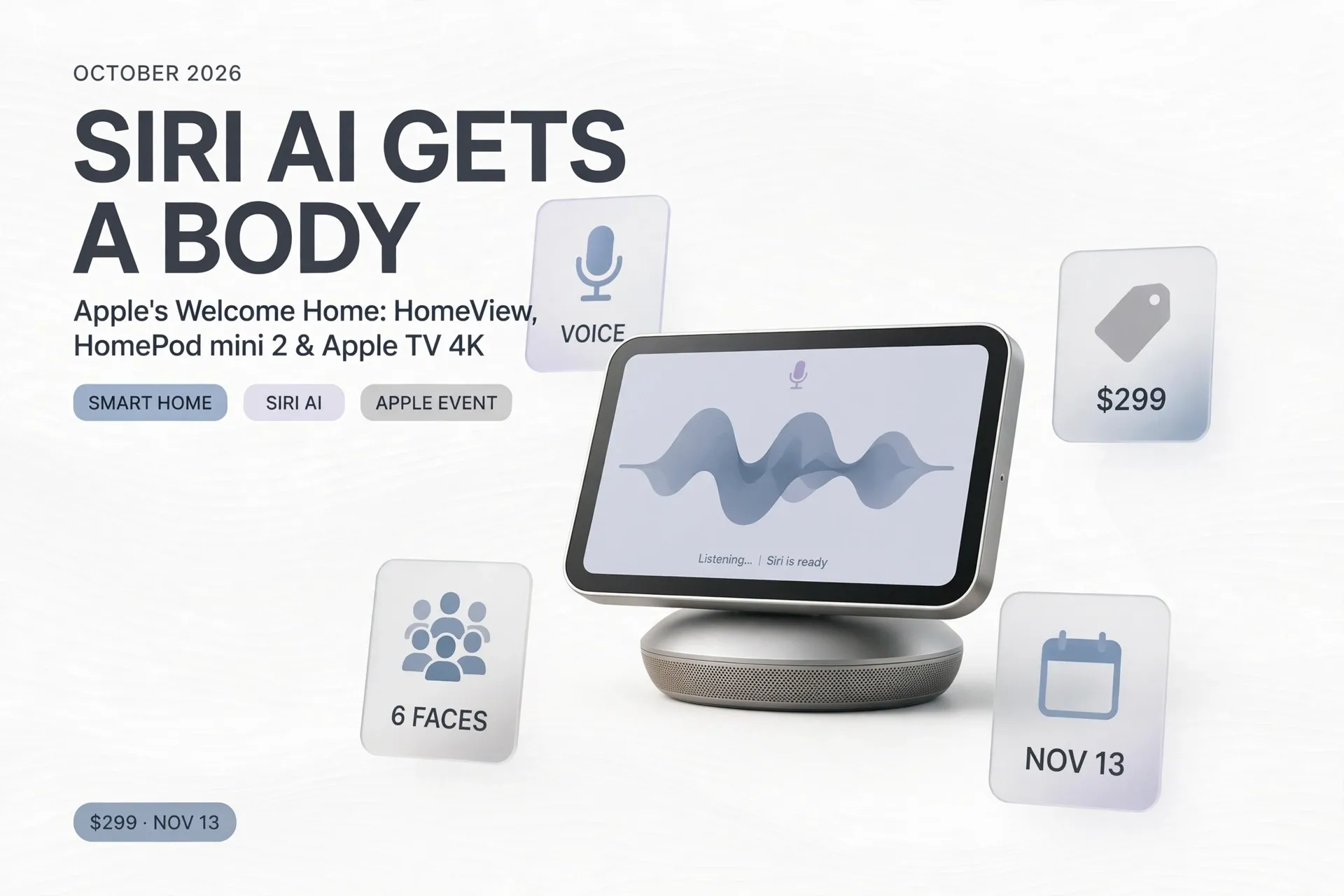
On Tuesday, October 13, 2026, Apple held "Welcome Home," an in-person media experience in New York City instead of its usual streamed keynote. The agenda was the living room: three smart home products — the all-new HomeView smart home hub ($299, shipping November 13), a second-generation HomePod mini ($149, shipping October 30), and a fourth-generation Apple TV 4K ($299, shipping November 13). All three opened for pre-order the same day.
The hardware is only half the story. The thread connecting all three devices is Siri AI, Apple's rebuilt conversational assistant. Previously available as an Apple Intelligence beta on iPhone, iPad, Mac, and Apple Watch, Siri AI now gets dedicated hardware of its own — a screen, speakers, and microphones designed around voice-first interaction. Here is what Apple announced, what it costs, and what it means for how AI enters the home.
HomeView: Apple's First Smart Home Hub
The headliner is HomeView, Apple's first dedicated smart display — a 7-inch Liquid Retina touchscreen powered by an A18 chip. It comes in two versions: a tabletop model with a domed aluminium speaker base and a stainless steel tilting hinge, and a wall-mounted model. Both cost $299 in the US, with pre-orders open since October 13 and shipments starting November 13.
The tabletop version ships in silver, starlight, rose pink, and space gray; the wall-mounted version comes in space gray and silver, with the mount sold separately. A 12-megapixel Center Stage camera above the display recognizes up to six household members by face, automatically switching between a shared household screen and a personalized one. Greg Joswiak, Apple's senior vice president of worldwide marketing, described it as "designed to be shared by everyone in the home yet feel completely personal to each user."
On the software side, HomeView leans on widgets and a limited set of Apple apps — photos, guided recipes, hands-free kitchen timers, calendars, reminders, and smart home controls for lights, thermostats, and cameras. Notably, there is no public App Store on the device; third-party apps reach it through widgets donated from the user's own iPhone or iPad.
Three caveats matter. First, some of HomeView's AI features require a paired Apple Intelligence-capable iPhone or iPad — the hub doesn't do everything on its own. Second, it launches as English-only. Third, Apple has confirmed HomeView won't be sold in the European Union.
HomePod mini 2: The $149 Speaker, With Siri AI on the Way
The second-generation HomePod mini keeps the familiar spherical mesh design but upgrades the internals: an S10 chip, Wi-Fi 6E, Bluetooth 6, and Thread and Matter support for the smart home. It also introduces a new "chroma" color range, including pink alongside green, blue, white, and midnight.
The signature touch is "Sound Glow" — the touch surface lights up in sync with your music. At $149, it costs $50 more than the original's $99 launch price, and it ships October 30, a couple of weeks ahead of the other two announcements.
One honest footnote: Siri AI won't be available on the HomePod mini 2 at launch. Apple says support arrives later in a software update, so early buyers get the hardware first and the assistant second. In the meantime, the speaker works as a multi-room audio node — pair several for multi-speaker playback, set one as the default speaker for a Mac, or let it auto-calibrate when connected to the new Apple TV 4K.
Apple TV 4K (4th Generation): Hands-Free Siri for the TV
The fourth-generation Apple TV 4K is the most expensive streaming box Apple has sold: the 128GB model costs $299, up from the $129 starting price of the 2022 model, and it ships November 13. The price jump buys meaningful upgrades. An A19 chip delivers, by Apple's own account, up to 50% faster CPU performance — a company-reported figure, not an independent benchmark.
The headline feature is hands-free Siri. Far-field microphones built into the box itself mean you can talk to Siri without reaching for the remote or owning a HomePod. The new Siri Remote adds Find My with Precision Finding and can play a sound to help you locate it between the couch cushions; sold separately, it's $59 and compatible with older Apple TV models too.
Also on board: Wi-Fi 7, more internal storage, and support for surround sound using four HomePods as front and rear pairs. And if you already own an Apple TV 4K from 2021 or later, you don't need new hardware for the assistant upgrade — Apple is bringing Siri AI and Apple Intelligence to those models as a free beta update.
The Bigger Play: Apple Home Collection
Apple also used the event to widen the HomeKit ecosystem. The new "Apple Home Collection" is a line of accessories co-designed with LG and Schneider Electric — cameras, a video doorbell, a smart lock, and thermostats — rolling out from December. LG's cameras save video straight to the user's iCloud+ storage plan, so there's no separate camera subscription to manage. Separately, ADT will offer professional in-home installation of HomeView and the other new products.
The strategy is clear: Apple is betting that on-device Apple Intelligence can make Siri meaningfully faster and more private than cloud-dependent rivals, and it's trading an open app ecosystem for tighter curation. Whether that trade pays off depends on how good Siri AI actually feels when the hardware lands in November.
Siri AI: The Real Headline
Strip away the hardware and this was really a Siri event. The assistant Apple is shipping here holds conversations, answers general questions, and takes natural-language requests — a long way from the timer-setting Siri of old. On HomeView, you can ask for a recipe, start a hands-free timer, pull up family photos, or adjust the thermostat in the same breath. On Apple TV, Siri AI makes content discovery conversational instead of menu-driven.
Siri is Apple's built-in AI voice assistant — free, pre-installed across iPhone, iPad, Mac, Apple Watch, HomePod, and Apple TV — and this event marks its biggest leap yet, from a phone feature to the center of the home.
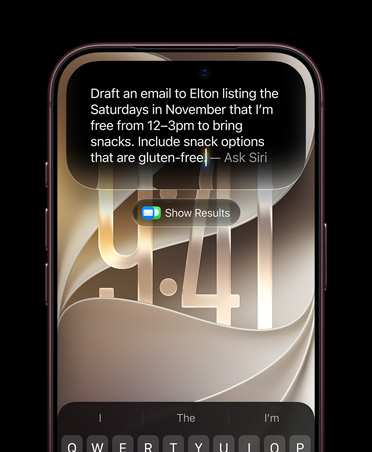
Apple is also leaning hard on privacy as a differentiator: much of the processing happens on-device, and the company is touting a set of privacy features specific to HomeView, including on-device face recognition for the camera.
The limitations deserve equal billing: English-only at launch, no EU availability for HomeView, no third-party App Store on the hub, some AI features gated behind a paired iPhone or iPad, and Siri AI arriving late to the HomePod mini 2. Apple is asking buyers to bet on a roadmap, not just a product.
How Siri AI Compares
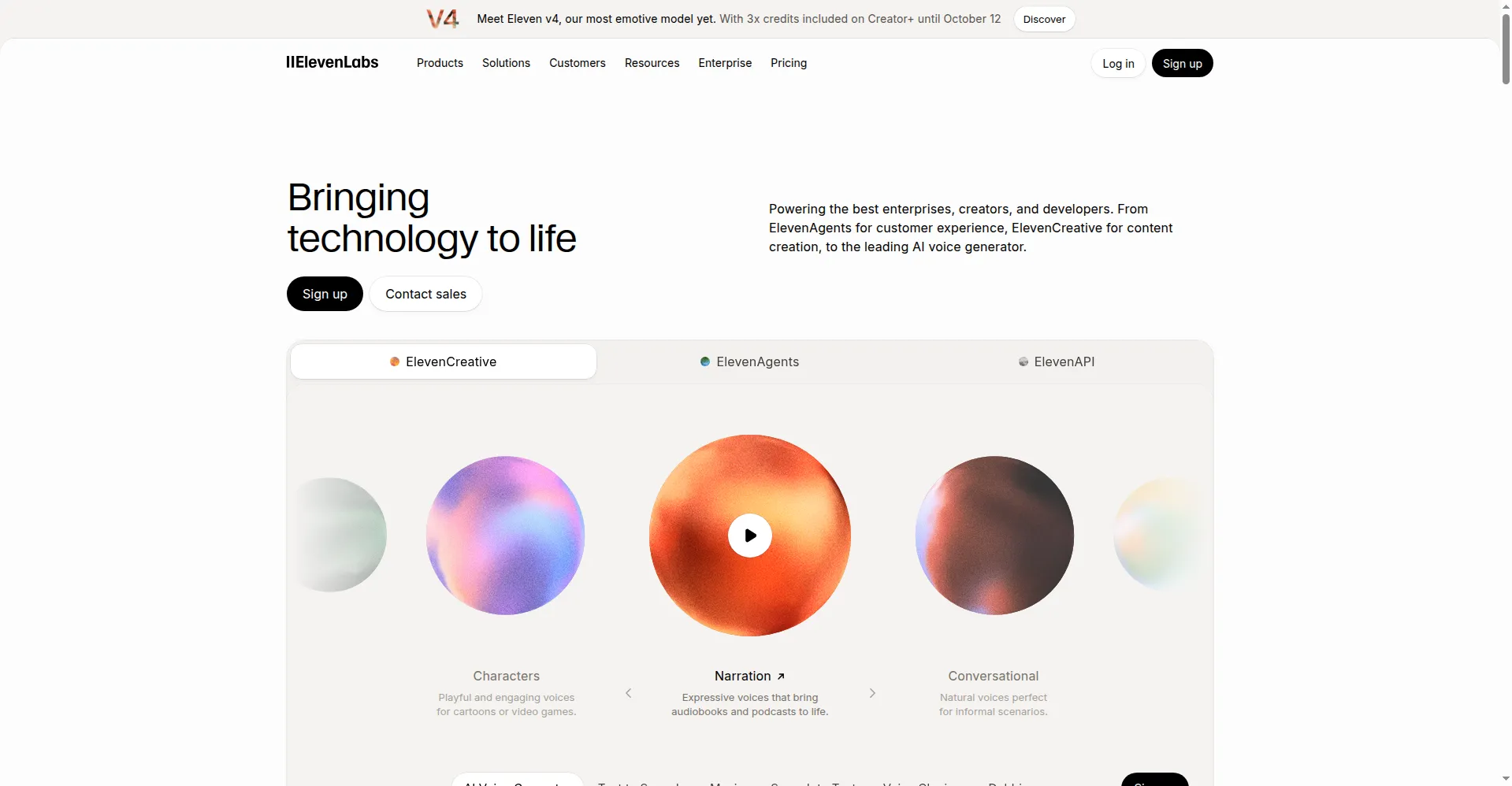
Siri AI isn't entering an empty room. Amazon and Google have sold smart displays for years, and standalone voice AI tools have been iterating fast. If you want to compare approaches, a few are already listed on NAVS: ElevenLabs, whose voice models power remarkably natural-sounding speech; ChatGPT, with its real-time voice mode; and Google Gemini, Google's assistant-side answer to conversational AI.
Apple's differentiator isn't the model — it's the hardware-software integration and the on-device privacy story. The open question is whether that integration matters more to buyers than the openness and cross-platform reach of its rivals.
The Bottom Line
"Welcome Home" was Apple's most focused hardware push in years: one new category in HomeView, two meaningful refreshes, and a clear message that Siri AI is the company's smart home platform going forward. The pricing is confident — $299 twice, $149 for the speaker — and the staggered rollout (October 30, then November 13) gives Apple two bites at the holiday season.
The open questions are all about execution: how good Siri AI feels in daily use, whether the widget-based model on HomeView attracts developers, and how quickly the delayed Siri AI update reaches the HomePod mini 2. If you're choosing between ecosystems, remember the assistant you talk to every day matters more than the speaker it lives in — choose accordingly.
Sources
- MacRumors — "Welcome Home: Everything Apple Announced on October 13" — https://www.macrumors.com/2026/10/13/apple-october-13-recap/
- PC Guide — "Apple introduces 'central to the home' HomeView device, along with new HomePod mini & Apple TV 4K" — https://www.pcguide.com/pro/news-pro/apple-introduces-central-to-the-home-homeview-device-along-with-new-homepod-mini-apple-tv-4k/
- 9to5Mac — "Apple HomeView smart home hub: four colors, November release" — https://9to5mac.com/2026/10/11/apple-homeview-home-hub-four-colors-november/
- Appleosophy — "Breaking News: Apple Announces HomeView, New Apple TV 4K, and New HomePod Mini" — https://appleosophy.com/wire/al8h573/
- TechCity — "Apple HomeView price, release date and everything announced" — https://www.techcityng.com/apple-homeview-apple-tv-4k-homepod-mini-2-announced/