
Muse Code vs Claude Code: Meta's $5 Challenger Takes On Anthropic's Terminal Mainstay
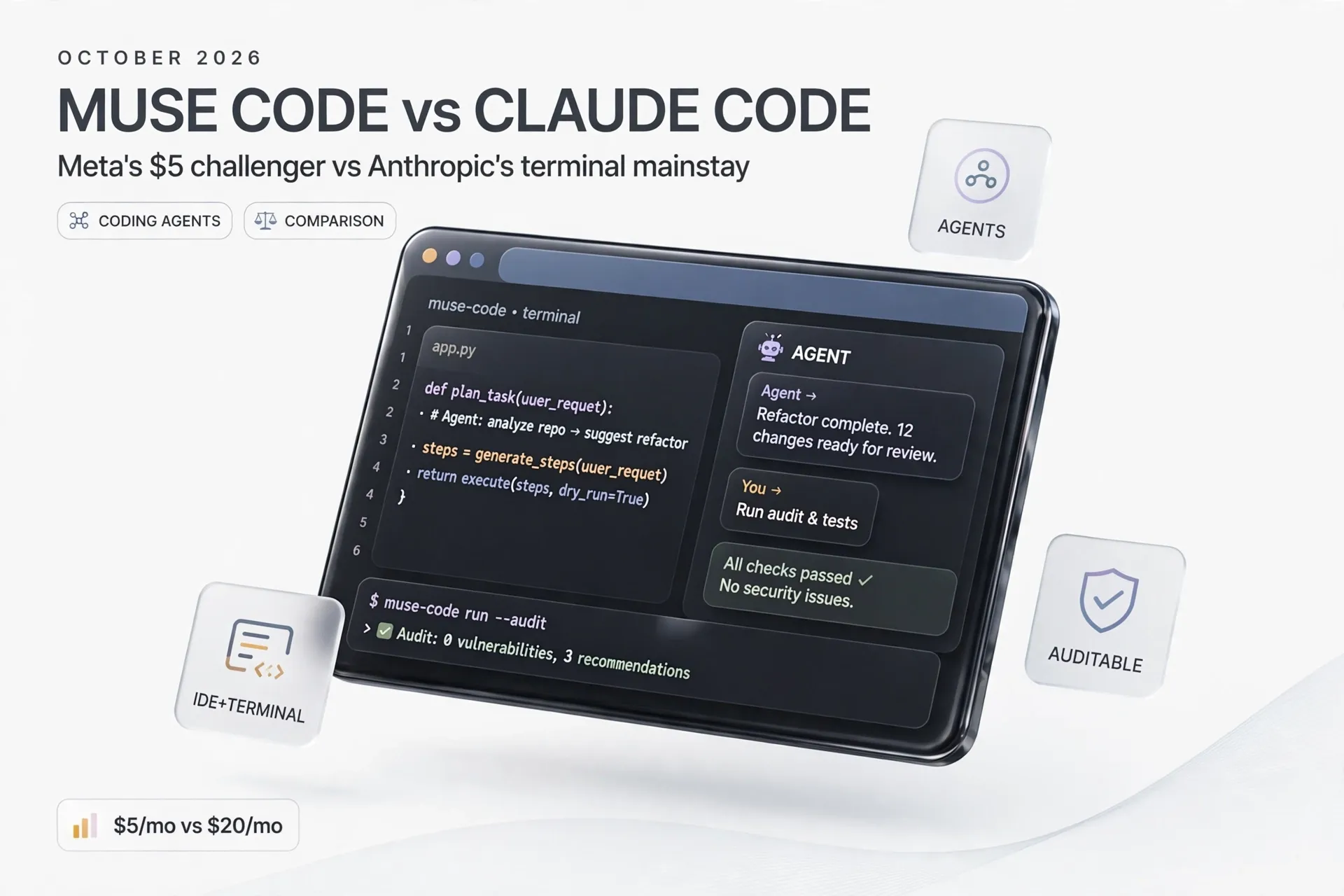
The battle for developers' terminals just got a lot more interesting. On October 12, 2026, Meta released Muse Wonder and Muse Wonder Full — new frontier models it calls its most capable yet — and immediately loaded them into Muse Code, its terminal-based AI coding agent, with subscriptions starting at $5 a month. On the other side stands Claude Code, Anthropic's agentic coding tool, which has spent the past few years becoming the default agent many developers reach for first.
Both live in the terminal, both promise to handle complete software engineering tasks rather than just autocomplete, and both now come with aggressive subscription pricing. But they come from very different philosophies and target different trade-offs. This comparison breaks down what each one actually does, what it costs, and which developer should pick which.
Meet the Contenders
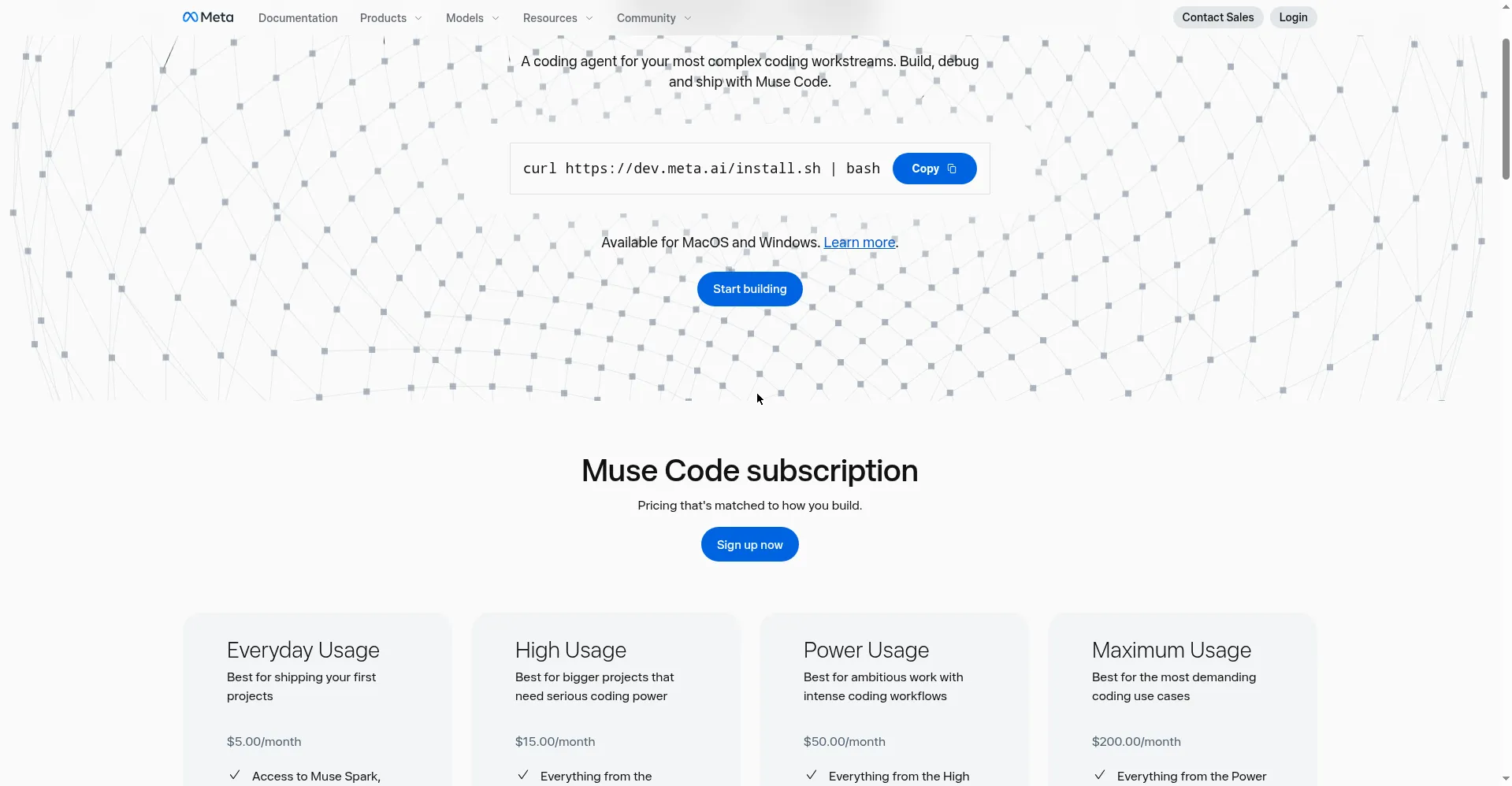
Muse Code is Meta's coding agent for "your most complex coding workstreams," built by the company's Superintelligence Labs. You install it with a single command (curl https://dev.meta.ai/install.sh | bash) and it runs on macOS and Windows. Meta describes it as "multi-agent by default": multiple agents coordinate on every task, with workers running in parallel and reviewers in the background. The company also stresses auditability — every action is transparent and traceable — and says the agent is co-trained with Muse Spark for tighter integration, with "better tool use, fewer retries and higher-quality output than a generic wrapper." The pitch is unmistakable: Meta wants Muse Code to compete directly with Claude Code and OpenAI's Codex for repo-scale work, not for single-file trivia.
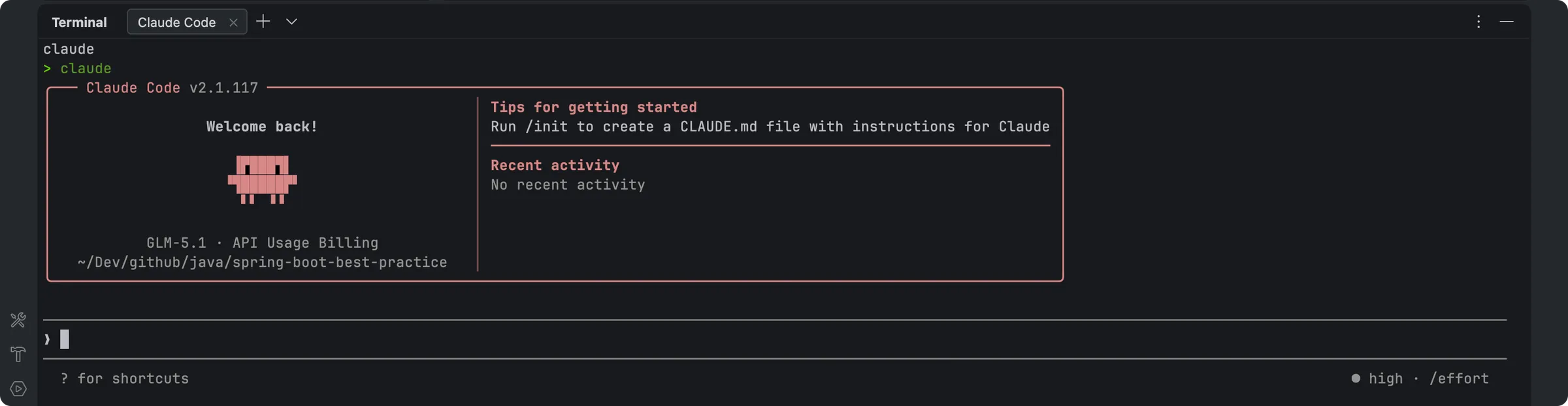
Claude Code, from Anthropic, takes a broader approach. You hand it a bug fix, a test suite, or a multi-day migration, and it plans, writes code, runs tests, and opens pull requests — while you steer from the terminal, your IDE, Slack, or the web. It runs on macOS, Linux, and Windows, and is available through Claude Pro and Max plans, Team and Enterprise plans, or a Claude Console account. Claude Code asks for permission before changing files or running commands, and it runs locally in your terminal, talking directly to Anthropic's model APIs without a remote code index.
Head-to-Head: The Key Differences
| Muse Code (Meta) | Claude Code (Anthropic) | |
|---|---|---|
| Starting price | $5/month (Everyday Usage) | $20/month (Pro; $17/month on annual) |
| Top individual tier | $200/month (Maximum Usage) | $200/month (Max 20x) |
| Default models | Muse Spark / Muse Wonder; Wonder Full on Power ($50) and Maximum ($200) plans | Claude Opus / Sonnet / Haiku via subscription or API |
| Platforms | macOS, Windows | macOS, Linux, Windows |
| Install | One-line curl installer | Download from code.claude.com, sign in |
| Beyond the terminal | Web search, voice mode in plans | IDE integration, Slack, web |
| Agent architecture | Multi-agent by default; parallel workers | Long-running sessions; plan-first workflows |
| API pricing (per 1M tokens) | Muse Spark 1.3: $1.25 input / $4.25 output (standard); $0.10 / $0.20 contributor tier | Sonnet 5.5: $2 input / $10 output (per official pricing); Opus 5.5 fast mode $8 / $40 in research preview |
Pricing details are current as of mid-October 2026, per each company's official pages and published pricing tables; plan prices and usage allowances are subject to change at each vendor's discretion.
Pricing: The $5 Entry Point Changes the Math
The most striking difference is the price ladder. Muse Code's Everyday Usage plan costs $5 a month and includes access to the latest Muse models, 10–50 prompts every five hours (including image and video uploads), voice mode, and web search. High Usage at $15 a month multiplies that by 5x with more multimodal inputs, and Power Usage at $50 a month offers 20x the Everyday allowance, early access to new features, and access to Muse Wonder Full — Meta's maximum-reasoning model. Third-party checks of Meta's product page on October 13, 2026 also confirm a Maximum Usage tier at $200 a month.
Claude Code, by contrast, comes bundled with Anthropic's existing subscriptions: Pro at $20 a month (or $17 a month billed annually), Max 5x at $100 a month, and Max 20x at $200 a month — defined relative to Pro, with Max 20x offering 20 times more usage per session. Team and Enterprise plans are also available, and a Console account can run Claude Code on pure pay-per-token API billing.
If you measure by entry cost alone, Muse Code undercuts Claude Code's cheapest tier by 75%. But there is a catch on the API side worth noting: Meta's public model pricing lists a "contributor" rate for Muse Spark 1.3 ($0.10 input / $0.20 output per 1M tokens) that is explicitly tied to data being "used to improve our products" — versus $1.25 / $4.25 for the non-contributor tier. Teams working on sensitive codebases should read that trade-off carefully before optimizing for price.
For API users, Anthropic's pricing page puts Claude Sonnet 5.5 at $2 per million input tokens and $10 per million output tokens, and the company's official Claude Code FAQ lists an Opus 5.5 "fast mode" — 2.5x faster — at $8 / $40 per million tokens in research preview on consumption-based plans.
Performance Signals: What Independent Tests Suggest
Vendor benchmarks should always be read with skepticism — but one independent data point is worth noting. Artificial Analysis tested complete coding systems by pairing each model with the agent software that runs it. According to results reported on October 13, 2026, Muse Code powered by Muse Wonder scored 63 on the firm's Coding Agent Index, up from 54 with Muse Spark 1.3. Muse Wonder Full reached 68, tying Claude Code running Sonnet 5.5 (68), while Claude Code with Opus 5.5 scored 66.
The largest gain for Muse Code came on Terminal-Bench 4.0, where success rates rose from 32% with Spark to 47% with Wonder (59% for Wonder Full). These are single-attempt task-success figures averaged across three runs per task — useful as a signal of progress, not as proof of superiority. Independent testing coverage of the newest models is still limited, and Anthropic's models have a longer public track record on agentic benchmarks.
Feature Philosophy: Different Ideas of "Agent"
Muse Code is built around a multi-agent architecture: you give it a goal and a fleet of agents maps the codebase, makes coordinated edits, and runs in parallel while reviewers check the work. Two new model-side features from the Wonder launch feed into this: Active Memory (retrieving relevant details from past conversations) and Active Focus (trying alternative approaches and persisting when tasks hit roadblocks). It is a bold design for large, messy repos — but the ecosystem around it is still young.
Claude Code leans on long-horizon autonomy with guardrails. It builds a plan, asks clarifying questions, and handles work that runs for hours or days — following imports across the repo, running your tests, and keeping going when something breaks. The distinguishing features are maturity-era conveniences: deep Git and GitHub integration (read an issue, write the code, open the PR), checkpoint/rewind of sessions, IDE and Slack surfaces so you never have to leave your workflow, and a permission system that asks before touching your files. It is the more conservative, more polished choice.
Limitations Worth Knowing
Muse Code:
- No Linux client. Meta's official page lists macOS and Windows only; Linux developers are left out.
- Young ecosystem. Fewer community workflows, plugins, and third-party integrations than Claude Code.
- Privacy trade-off on cheap API tiers. The steep contributor discount means your data helps improve Meta's products; the non-contributor tier is over 10x more expensive.
- New models, thin independent validation. Wonder launched October 12, 2026; independent benchmark coverage is still limited.
Claude Code:
- Higher entry price. $20 a month versus $5 to get started.
- Model lock-in. It runs on Anthropic models only — you cannot plug in an open-weight or rival model.
- Subscription ceilings. Heavy users can hit usage caps and face weekly limits; going beyond them means more expensive tiers or API billing.
- Younger features cost extra. Opus 5.5 fast mode sits in research preview with premium pricing.
Who Should Pick Which
Choose Muse Code if:
- You want the cheapest serious entry point into agentic coding ($5/month).
- You are curious about Muse Wonder / Wonder Full and want the flagship model inside a $50 subscription.
- You work on macOS or Windows, in large repos where a multi-agent, parallel workflow appeals to you.
- You are comfortable with a newer, faster-moving tool and its thinner ecosystem.
Choose Claude Code if:
- You are on Linux, or you want IDE, Slack, and web surfaces alongside the terminal.
- You value maturity: battle-tested permission controls, session checkpoints, and deep GitHub workflows.
- You run long, autonomous jobs (hours or days) and want the agent that has been doing that longest.
- You need Team or Enterprise plans with admin controls and predictable billing.
Bottom Line
For the first time in this corner of the market, there is a credible challenger playing on both fronts: Meta is matching Claude Code's agentic-terminal playbook while undercutting it on price. Muse Code's $5 entry plan and the Wonder models' independent test results make it a genuinely interesting experiment for developers who want to see how far a multi-agent architecture can go.
But "interesting experiment" is the right framing for now. Claude Code remains the safer default: broader platform support, a mature integration ecosystem, local-first execution with explicit permissions, and a longer public record of autonomous coding performance. The smartest move for most developers is to spend a month on Muse Code's $5 plan with a non-critical project, keep Claude Code on your main work, and let the results — on your own repos, not vendor charts — decide.
Sources
- Muse Code — Meta official product page
- Claude Code — Anthropic official product page
- Artificial Analysis coding-agent test results, via Winbuzzer (Oct 13, 2026)
- Muse Wonder Full pricing check, via kingy.ai (Oct 13, 2026)
- Claude Code pricing and plans, via morphllm.com
- Meta releases open-weight Muse Spark, via Reuters (Oct 15, 2026)