
Kimi K3.1 Pro Explained: The 2.8T Open-Weight Model, and 5 Ways to Use It
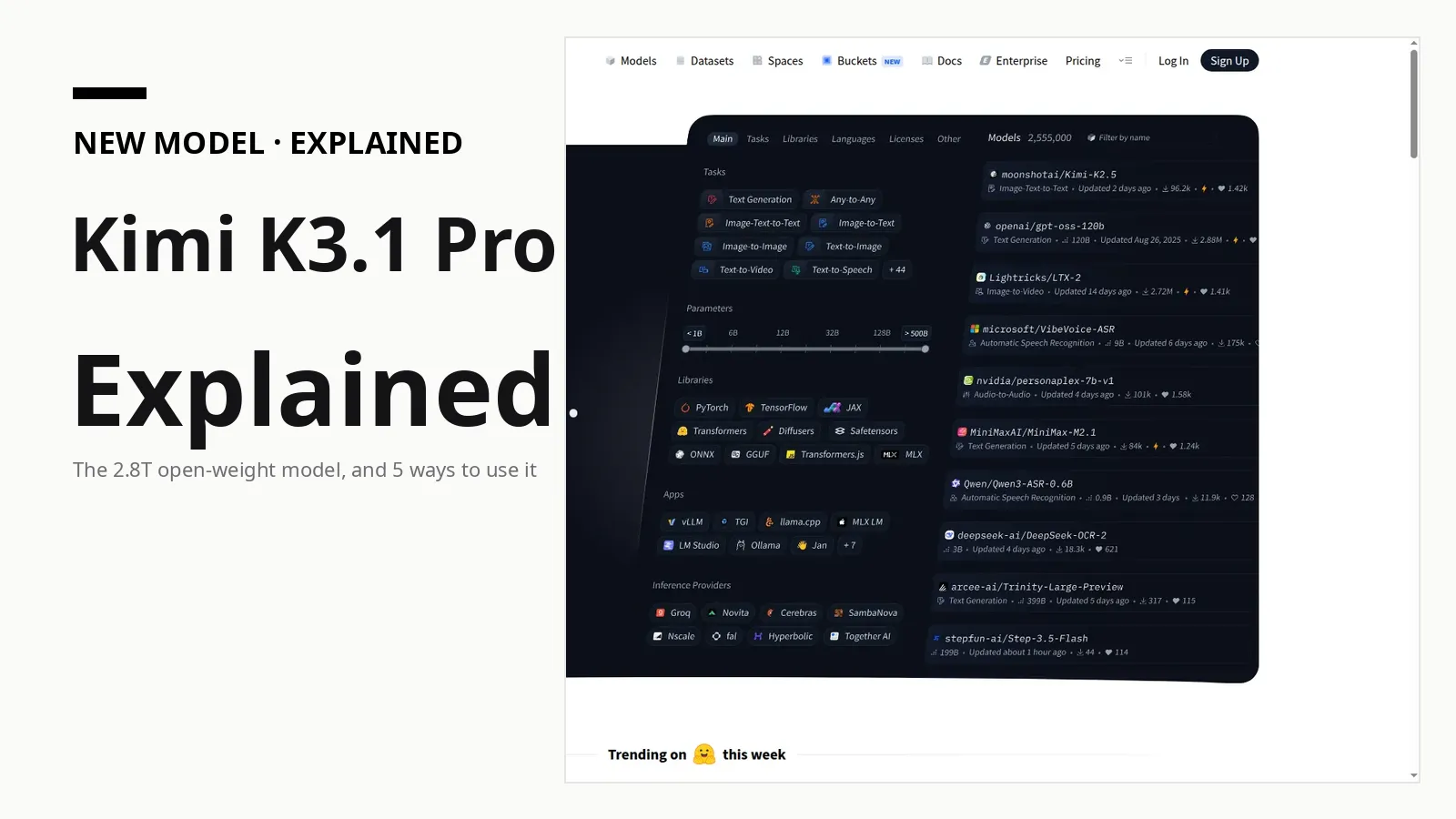
Moonshot AI kept its promise. On November 4, 2026, the full weights of Kimi K3.1 Pro landed on Hugging Face, twelve days after the model was announced. It is a 2.8-trillion-parameter mixture-of-experts model with a 1-million-token context window, and Moonshot says it is the strongest open-weight model it has ever shipped. The download is 1.56 terabytes across 96 files, the license has conditions that matter for commercial users, and the benchmark numbers come with the usual vendor caveats. Here is what actually shipped, what the numbers mean, and five concrete ways to try the model today.
The weights are out: what Moonshot actually shipped
Kimi K3.1 Pro was announced on October 23, 2026, as the first model in Moonshot's new K3.1 series. It is not a new base model. Moonshot describes it as a post-trained version of Kimi K3, the open-weight model it released in July, with substantially larger post-training compute spent on joint reinforcement learning across hundreds of downstream domains.
The architecture is a mixture-of-experts design: 2.8 trillion total parameters, with 104 billion activated per token, routed through 896 experts, 16 selected for each token plus two shared experts. The context window is 1,048,576 tokens, and the model takes text and image input through a 401-million-parameter MoonViT-V2 vision encoder. The weights are stored in MXFP4, a 4-bit format the model was trained with quantization in mind, which is why the full download is about 1.56 terabytes rather than the roughly 5.5 terabytes a full-precision copy would need.
Moonshot also ships a faster variant, Kimi K3.1 Pro Highspeed, which the company says runs 2 to 3 times faster than the standard model for more responsive interactions. Both models are live in the Kimi apps, Kimi Work, Kimi Code, and the Kimi API under the model IDs kimi-k3.1-pro and kimi-k3.1-pro-highspeed.
The release matters because the weights are the checkable part of the launch. A model announcement is a claim; open weights let anyone download the model, run it, and test it. Moonshot published the repository as moonshotai/Kimi-K3.1-Pro on the promised date, and the model card lists vLLM, SGLang, and TokenSpeed as recommended inference engines. As of writing, no independent evaluation of the released checkpoint has been published, so the benchmark story below is still mostly Moonshot's own numbers.
Benchmarks: what Moonshot claims, and what others measured
The headline number, according to Moonshot, is 65.7% on Terminal-Bench 4.0, a suite that grades coding agents on realistic terminal tasks with strict per-task tests. Moonshot puts OpenAI's GPT-6 Astra at 58.2% and Anthropic's Claude Opus 5.5 at 66.4% on the same test, which would place Kimi K3.1 Pro just 0.7 points behind the best proprietary model. That is a vendor-run table, evaluated with the Claude Code harness; the competitor scores were compiled, not rerun. Treat it as an early signal, not a settled ranking.
Other numbers from Moonshot's technical blog follow the same pattern. On the company's internal Kimi Code Bench 3.0 Long-horizon test, K3.1 Pro scores 61.2%, up from 55.95% for K3. On BenchCAD, which tests 3D reconstruction through CAD code generation, it scores 92.7% with tools, behind Opus 5.5 at 96.2% and GPT-6 Astra at 95.9%. On OfficeQA Pro v2, a test of analysis across real financial documents, Moonshot reports 64.4 and calls it a state-of-the-art result. On an internal hallucination stress test, the claim-level error rate fell from 23.4% for K3 to 8.3% — though Moonshot itself warns that this is a deliberately hard stress test and does not represent everyday error rates.
The first outside number arrived on launch day. Artificial Analysis gave Kimi K3.1 Pro 55 points on its Intelligence Index, an 11-point jump over K3, placing it fourth behind Claude Opus 5.5 at 58, Claude Sonnet 5.5 at 56, and Muse Wonder Full at 56, according to a report by The Decoder. That independent score is the strongest corroboration so far that the model belongs in the frontier conversation — and it is also a reminder that the gap between open weights and closed models, which The Decoder estimated at 12 points before this release, has narrowed to about 3.
Moonshot also highlights two capabilities beyond raw coding. The model can write and run scripts for Blender and CAD software without extra connectors, and a new 3D Make feature on kimi.com lets users preview and edit generated 3D models online, download them for 3D printing, or export them as videos. In finance, the company reports gains of 7.2 points on financial modeling and 11.6 points on financial research over K3. These are internal measures, so run your own documents through the model before trusting it with auditable work.
The license is not MIT: read the fine print before self-hosting
Open weights is not the same as open source, and Kimi K3.1 Pro is a good example. The model ships under the custom Kimi K3.1 Pro License, which grants broad rights to use, modify, fine-tune, and redistribute the weights, but with three conditions worth knowing before you build on it.
First, a company that runs a Model as a Service business and earns more than $20 million over any consecutive 12 months must sign a separate agreement with Moonshot before commercial use. Second, a product with more than 100 million monthly users, or more than $20 million in monthly revenue, must display "Kimi K3.1-Pro" in its interface. Third, internal use, and use through Moonshot's official products or certified inference partners, is exempt from the first two conditions.
In practice, most individual builders and small teams can self-host and fine-tune freely. Large API resellers cannot. The license also matters for the cybersecurity story, which is the most unusual part of this release. Moonshot says it deliberately removed cyber-related data from both mid-training and the reinforcement-learning mix for the open-weight release, because it does not want to extend the frontier of offensive cyber capability through open weights. On its in-house xdev-bench-hard suite, which rebuilds recently disclosed vulnerabilities and asks the agent to craft a working exploit, the checkpoint without that filtering scores 90.5% at pass@3; the released model scores 81.0%. Moonshot states the released model's offensive capability remains behind frontier proprietary models that have been publicly available for at least three months. A model that scores 81.0% on exploit tasks is still capable, so sandbox coding agents and gate their actions.
Five ways to use Kimi K3.1 Pro
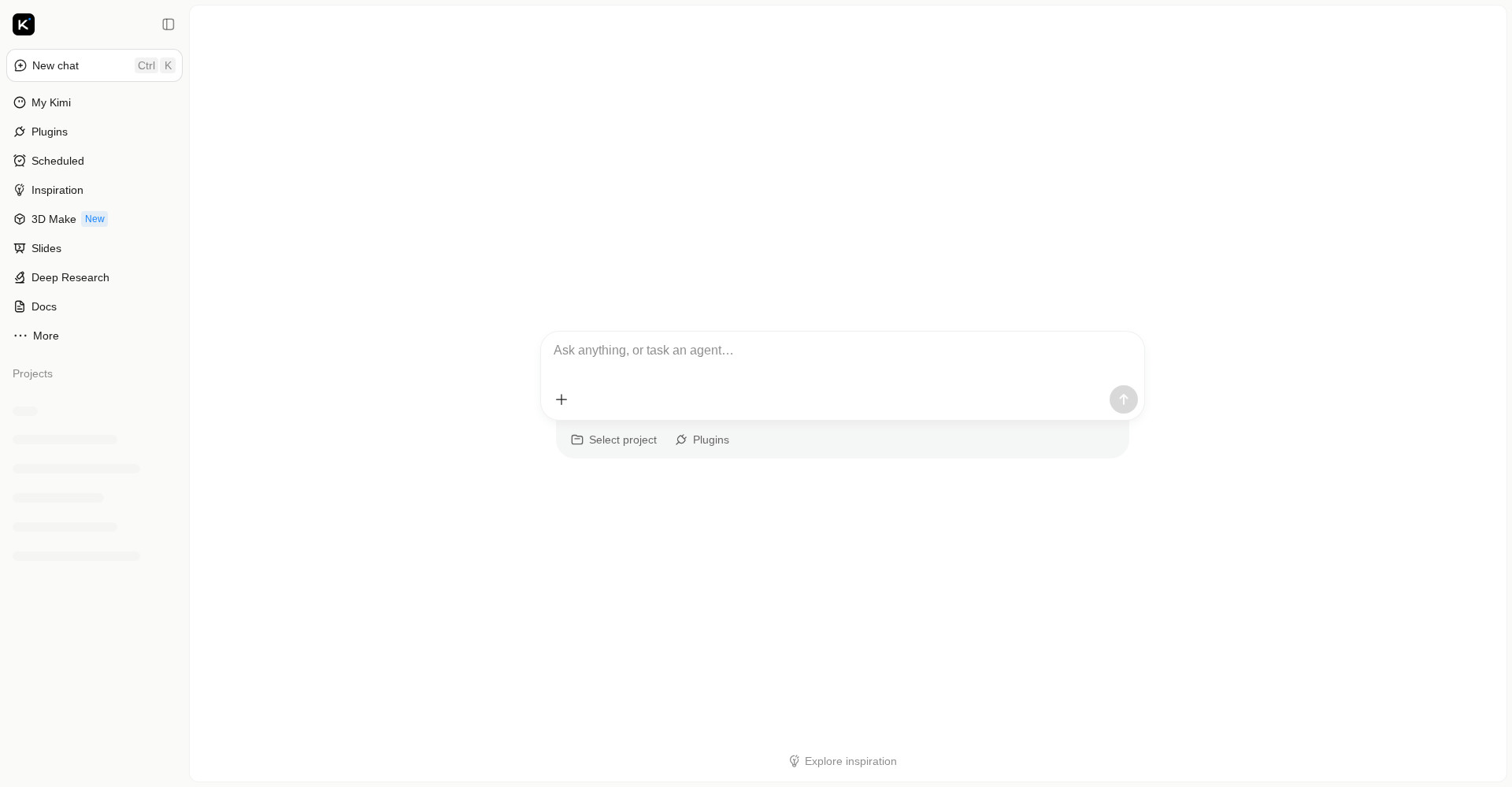
1. Chat with it on Kimi. The simplest entry point is the Kimi app or kimi.com, where K3.1 Pro is the default flagship model. The 1-million-token context window is the feature to test first: drop in a long document set, a whole codebase, or a pile of research papers and ask questions that span them. Kimi also ships the new 3D Make feature, which turns a text brief, sketch, or reference image into a previewable 3D model.
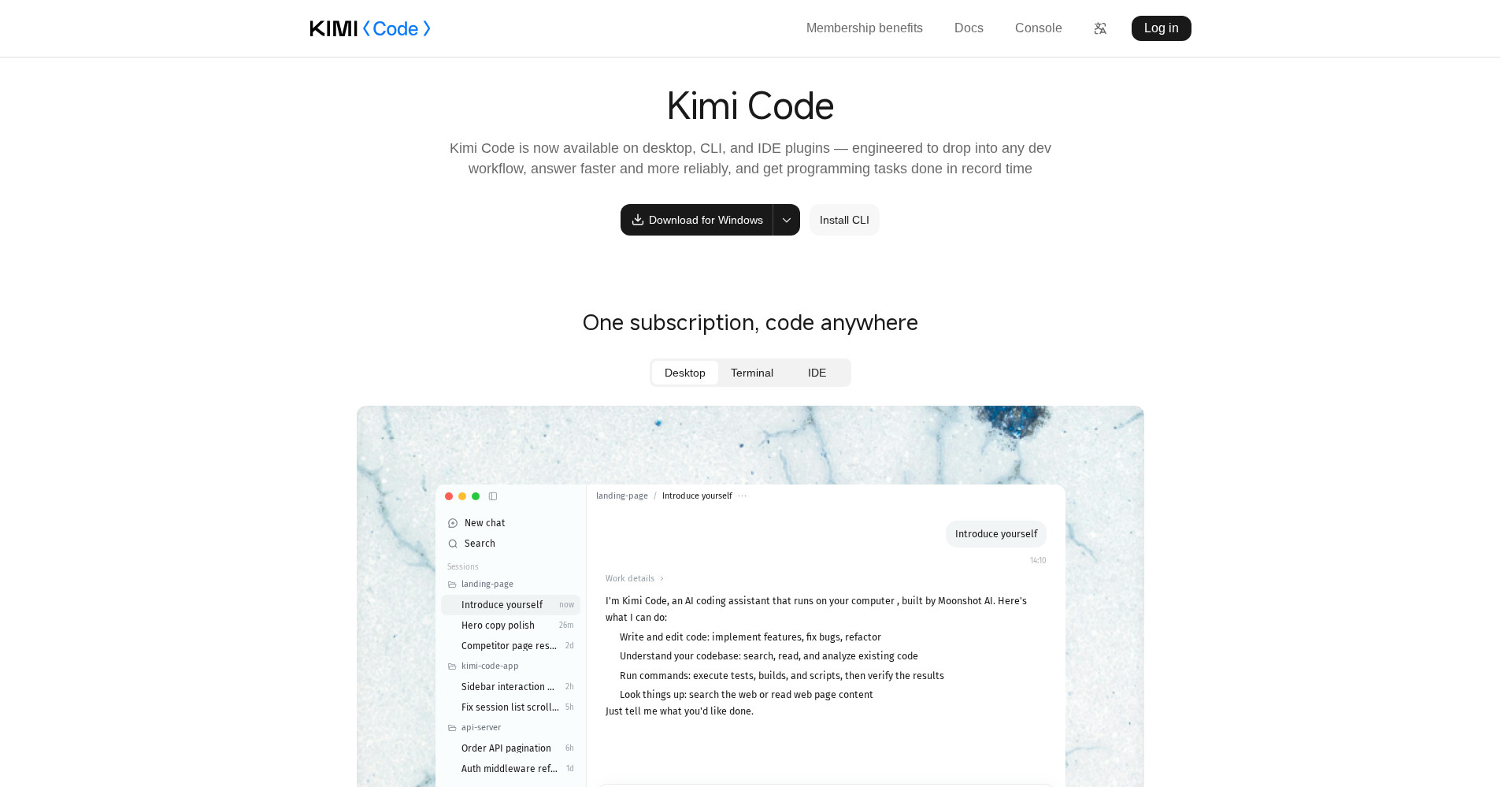
2. Code with it in Kimi Code. Kimi Code is Moonshot's coding agent, and it is where the Terminal-Bench numbers are supposed to show up in practice. Run the /model command and select Kimi K3.1 Pro, then give it multi-step work: fixing bugs across a real repository, building a small project end to end, or refactoring with tests.
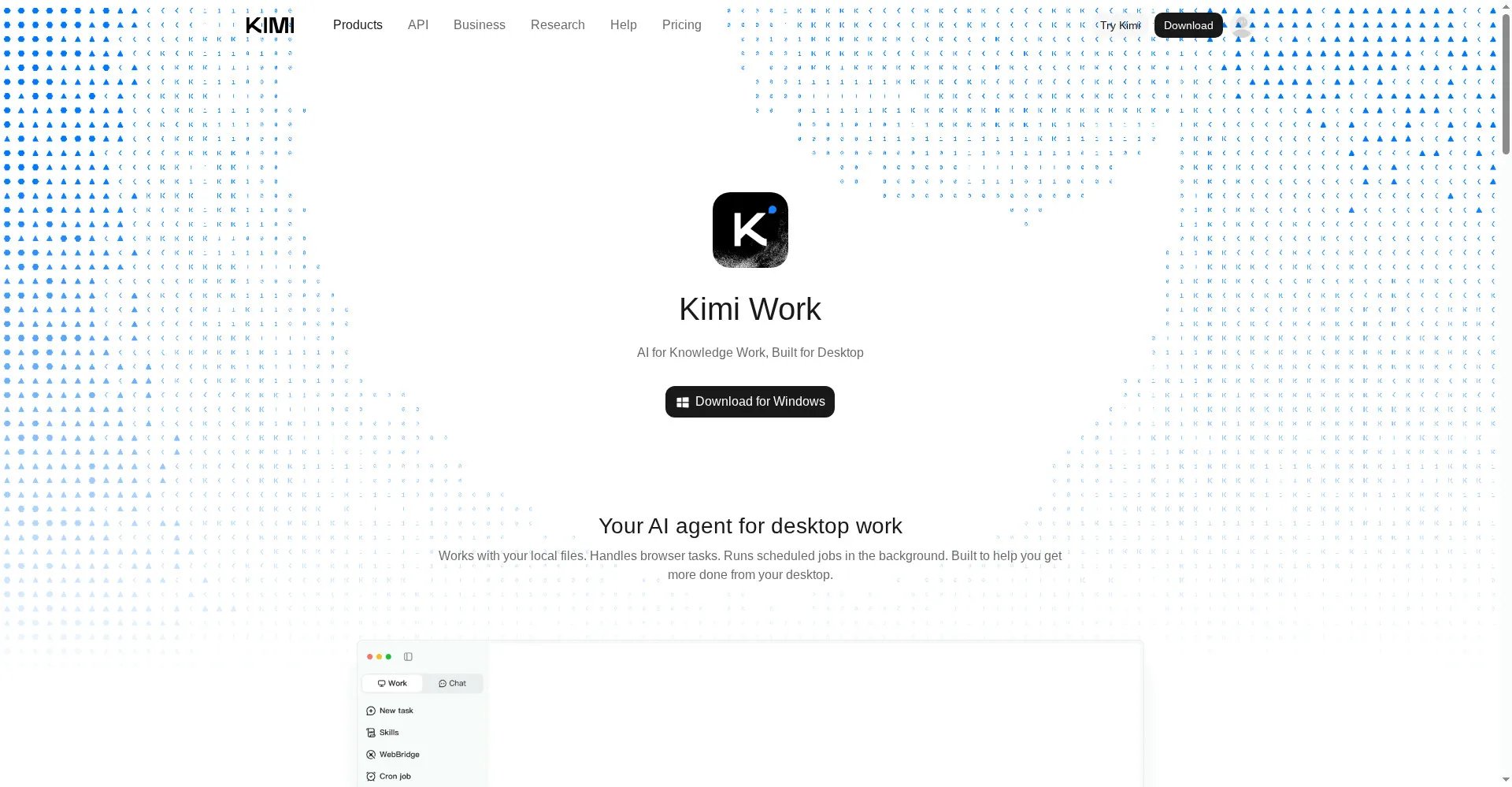
3. Hand it long jobs in Kimi Work. Kimi Work is the desktop agent for Windows and Apple silicon Macs — update to version 3.1.0 or later to get K3.1 Pro. It is built for the kind of long-horizon work the model was post-trained for: multi-step research, document analysis, and tasks that run while you do something else.
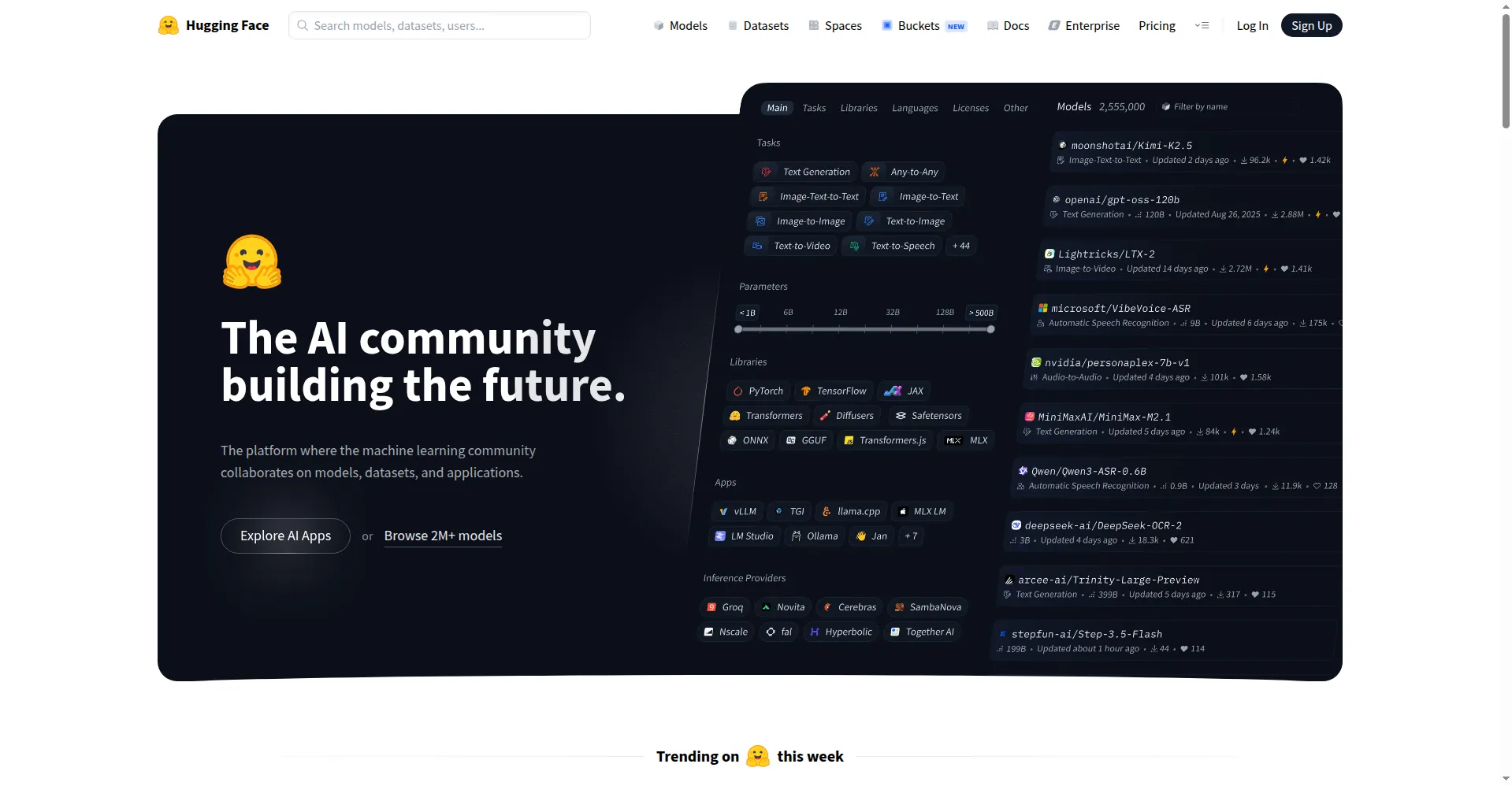
4. Download the weights from Hugging Face. The repository moonshotai/Kimi-K3.1-Pro holds the full weights. Before you start, do the arithmetic: 96 shards, 1.56 terabytes on disk, and roughly 1.5 terabytes of fast memory just to hold the weights at 4-bit precision. The model card notes that multi-turn tool calls require passing back the full assistant message, including the reasoning content. This path is for teams with multi-GPU servers, not laptops.
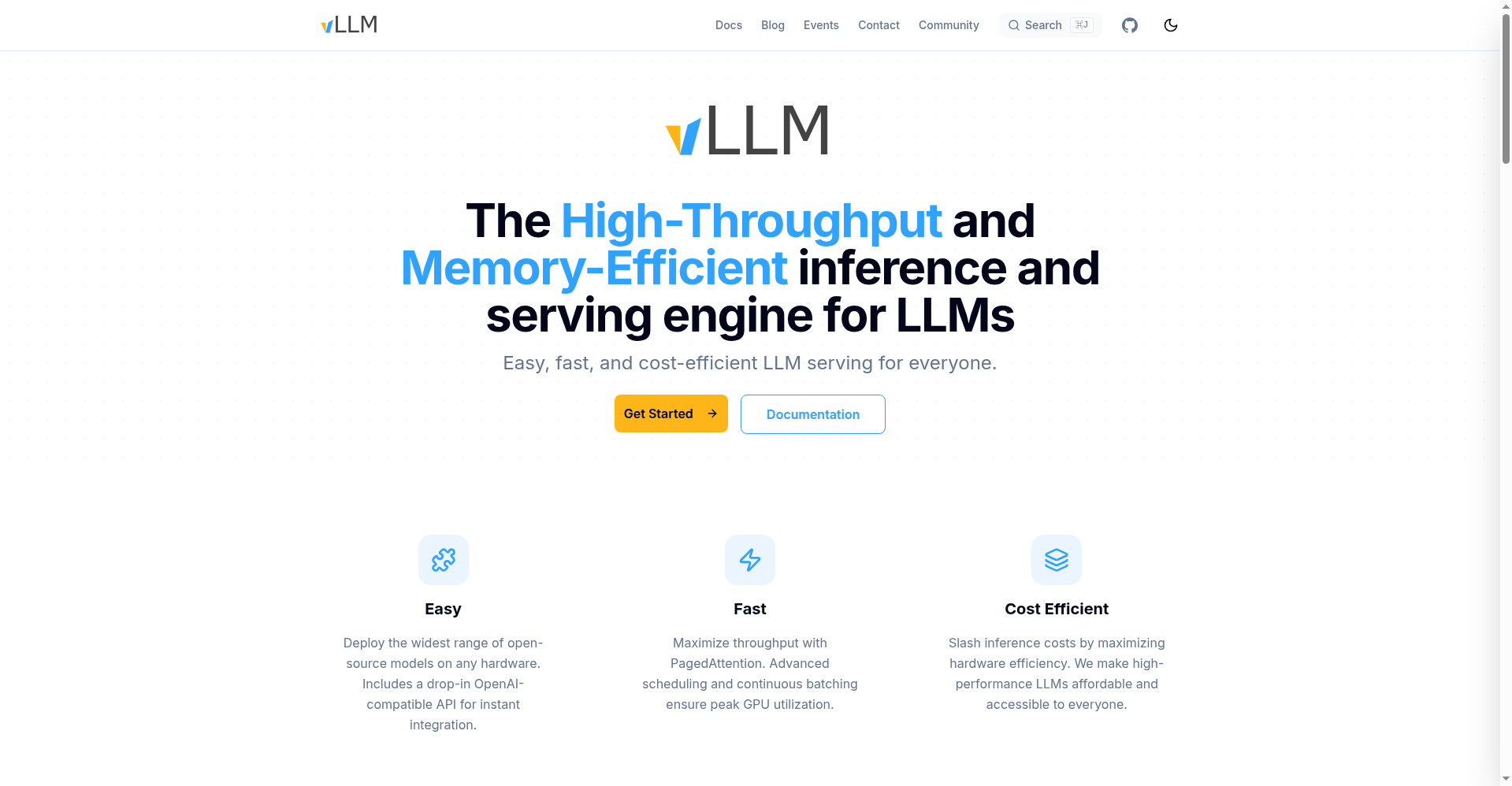
5. Serve it yourself with vLLM. If you have the hardware, vLLM is one of the inference engines Moonshot recommends for K3.1 Pro, alongside SGLang and TokenSpeed. The model card includes serving recipes for vLLM, and the engine's high-throughput design fits a model whose main selling point is long agentic sessions with heavy tool use.
Where it fits, and what to watch next
Kimi K3.1 Pro is the strongest open-weight model available today by the independent measures published so far, and the first one to sit within a few points of the best closed models on a respected index. For most people, the practical way in is the Kimi app or the Kimi API, where the model costs $2 per million input tokens and $10 per million output tokens, with cached input billed at $0.20. That is half the price of Claude Opus 5.5, and it matches the price of GPT-6.1 Sol.
Self-hosting is a different decision. The weights are free, but the bill is 1.56 terabytes of downloads, multi-GPU serving, and a custom license that draws a line at $20 million of API revenue. Teams that already run large models will find a frontier-class checkpoint they can audit and fine-tune. Everyone else should start with the hosted options and let the independent evaluations catch up.
Three things to watch in the coming weeks: whether independent labs reproduce Moonshot's benchmark numbers on the released checkpoint, whether the promised ecosystem around the weights materializes in the form of fine-tunes and smaller quantized builds, and whether the model's long-context agent skills hold up outside the vendor's own harness. The weights are out, which means the claims are now testable.
Sources
- Kimi official blog — kimi․com
- ExplainX — explainx․ai
- NeoTeo — neoteo․com
- GPUwerk — gpuwerk․com