Google’s Soundstorm
An open-source project called Soundstorm is dedicated to the project of generating an artificial intelligence voice (developed by Google).
Product screenshot
Overview
What is Google’s Soundstorm?
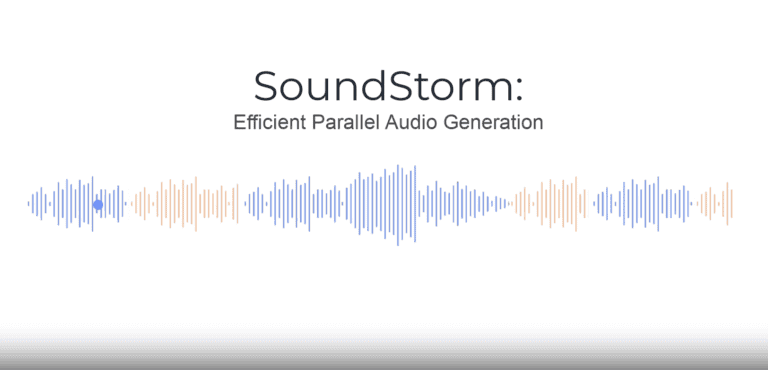
SoundStorm: Efficient Parallel Audio Generation
SoundStorm is a groundbreaking model developed by Google Research, designed for efficient, non-autoregressive audio generation. It leverages bidirectional attention and confidence-based parallel decoding to produce high-quality audio from semantic tokens, significantly faster than traditional autoregressive models.
Key Features
- Efficiency: SoundStorm generates audio two orders of magnitude faster than its predecessors, producing 30 seconds of audio in just 0.5 seconds on a TPU-v4.
- Quality and Consistency: Maintains the same audio quality while ensuring higher consistency in voice and acoustic conditions.
- Scalability: Capable of scaling audio generation to longer sequences, demonstrated by synthesizing high-quality dialogue segments.
- Control: Allows control over spoken content, speaker voices, and speaker turns through transcripts and voice prompts.
Main Use Cases
- Dialogue Synthesis: Coupled with SPEAR-TTS, SoundStorm synthesizes natural dialogues based on transcripts and voice prompts.
- Audio Generation: Ideal for generating high-quality audio quickly, suitable for various applications in media and entertainment.
User Experience
SoundStorm has been praised for its speed and the quality of its audio outputs. It maintains high acoustic consistency and speaker voice fidelity, outperforming previous models in both prompted and unprompted audio generation scenarios.
How to Use
To use SoundStorm, input the semantic tokens from AudioLM, optionally include a 3-second voice prompt for specific speaker characteristics, and let the model generate high-quality audio efficiently.
Potential Limitations
- Bias in Training Data: The model may reflect biases present in the training data, affecting the diversity of accents and voice characteristics.
- Misuse Potential: The ability to mimic voices could be exploited for malicious purposes, necessitating safeguards and ongoing research in detection methods.
SoundStorm represents a significant advancement in audio generation technology, promising faster and more controlled audio production while addressing ethical considerations in AI development.
Platforms and languages
Google’s Soundstorm Availability
Platforms
Languages
Compare similar tools
Google’s Soundstorm Alternatives
 StivioStivio turns a single photo into a moving HD video. Upload an image, describe the motion in plain English, and six leading AI video models render an HD MP4 in one to five minutes.AI Video CreationAI Image GenerationAI Creation Generationimage to videoai video generatorphoto animation
 UGCfy AICreate AI-generated UGC-style video ads from product links, with scripts, hooks, AI actors, captions, and export-ready formats.5.0(1 reviews)AI Video CreationAI Marketing ToolsAI Content Generationugc adsai video adsecommerce marketing
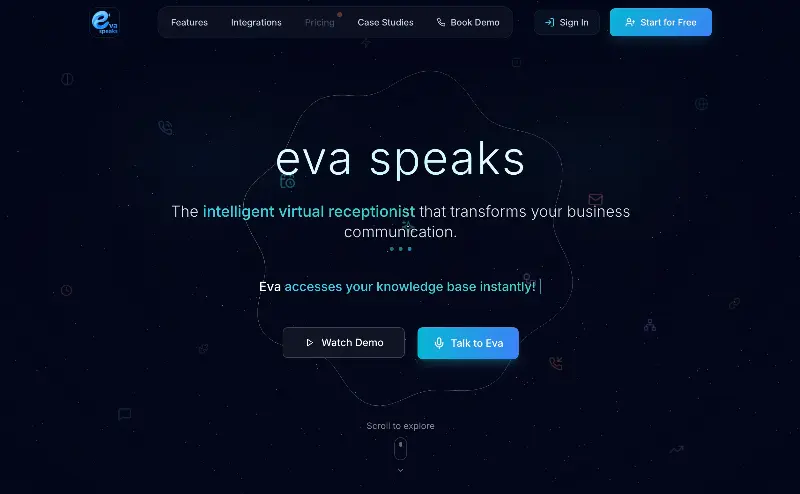 EvaSpeaksEvaSpeaks is an AI-powered virtual receptionist that answers calls 24/7, handles customer inquiries, schedules appointments, captures leads, and routes calls to the right team. It helps businesses improve response times, reduce missed opportunities, automate routine communication, and provide reliable customer support even outside regular business hours.5.0(1 reviews)AI Business SolutionsAI Voice RecognitionAI WorkflowAI receptionist
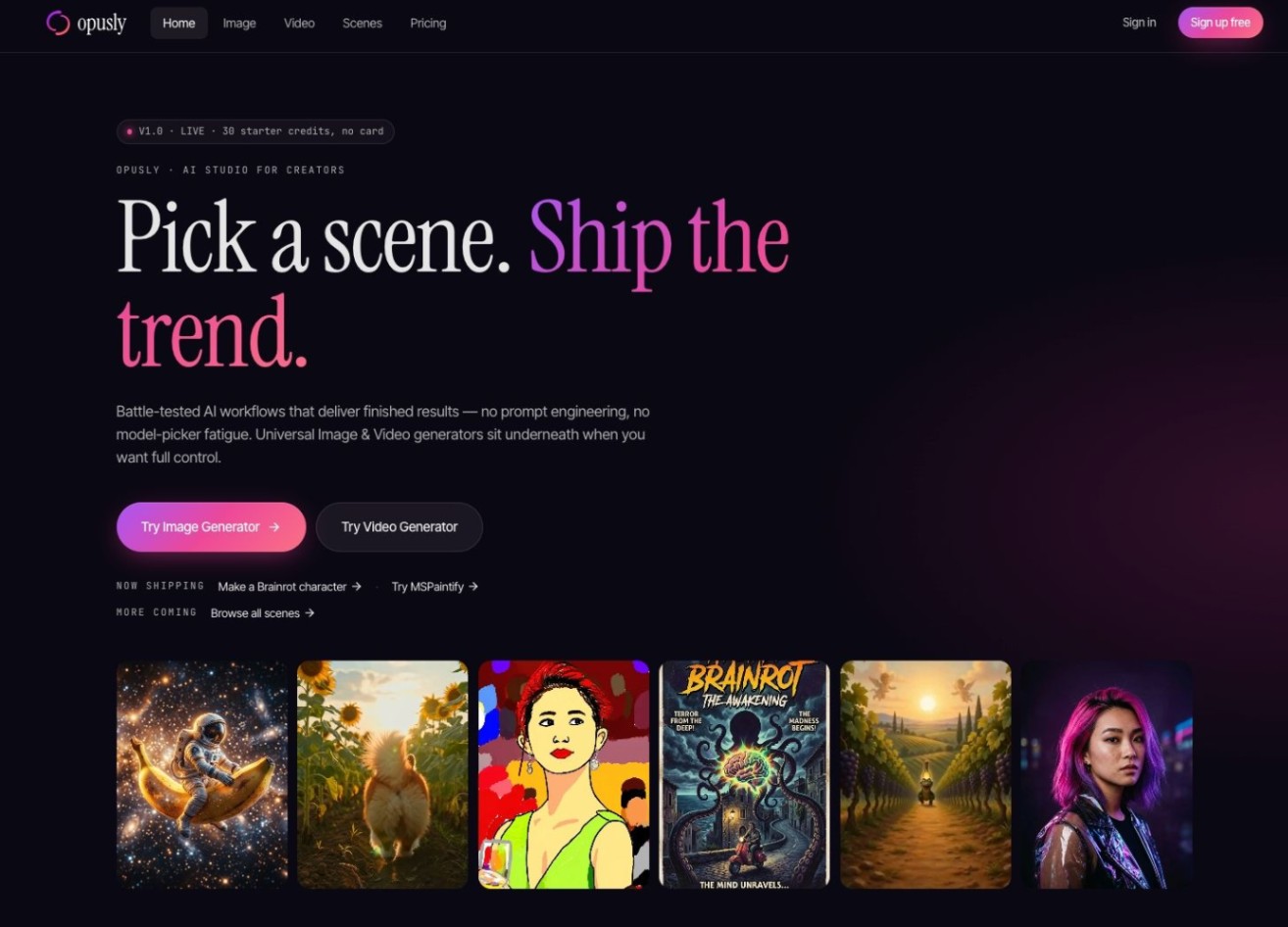 OpuslyOpusly is an AI studio for creators — generate images and videos with auto-picked best models (Nano Banana 2, GPT-Image-2, Seedance 2.0), or use one-click scene templates like Italian Brainrot and MSPaintify. Free signup includes 30 credits.AI Image GenerationAI Video CreationAI Design Art
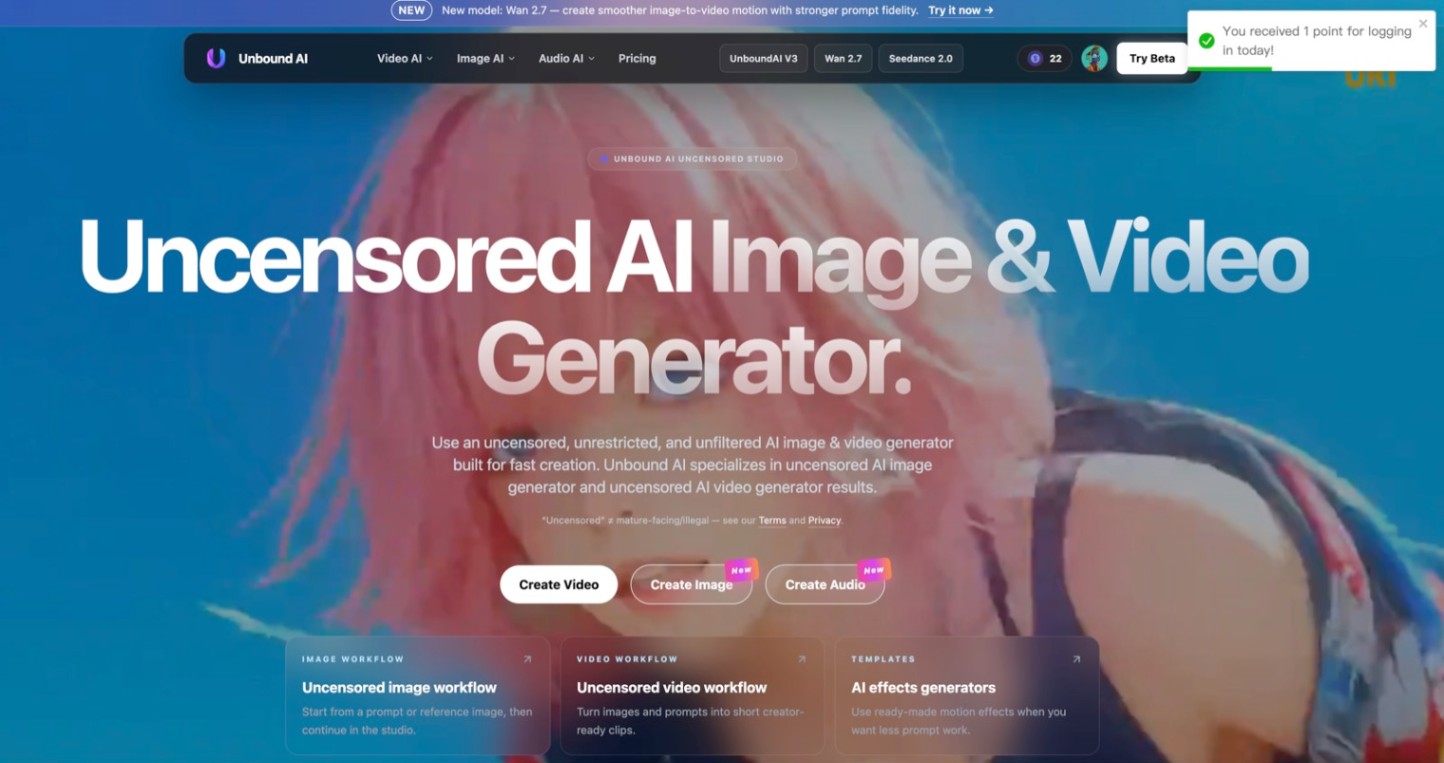 Unbound AICreate uncensored and unrestricted AI images and videos with optional music, voice, and sound effects.AI Image GenerationAI Video CreationAI Audio Tools
 ImgfreeImgfree is a free AI image and video generator that allows users to create stunning visuals from text prompts, offering unlimited access to various AI models without the need for credits.AI Image GenerationAI Video CreationAI Design Art
 Modellix.aiModellix is a MaaS (Model as a Service) platform that provides unified API access to maintream AI models, covering text-to-image, text-to-video, image-to-image, image-to-video, video editing, and more. Supported models include Nano Banana, Kling, Veo, Seedance, Seedream, Minimax, Qwen, Wanx, GPT, and others.
Whether you’re a developer building AI-powered applications or a creator producing visual content, Modellix provides the tools you need through a single API.AI Video CreationAI Marketing ToolsAI Image Generation
Modellix.aiModellix is a MaaS (Model as a Service) platform that provides unified API access to maintream AI models, covering text-to-image, text-to-video, image-to-image, image-to-video, video editing, and more. Supported models include Nano Banana, Kling, Veo, Seedance, Seedream, Minimax, Qwen, Wanx, GPT, and others.
Whether you’re a developer building AI-powered applications or a creator producing visual content, Modellix provides the tools you need through a single API.AI Video CreationAI Marketing ToolsAI Image Generation IdoliAIIdoliAI for Image & Video GeneratorAI Creation GenerationAI Image GenerationAI Video CreationAI Image GeneratorAI Art GeneratorAI Video Generator
 AstreaCreate video ads with AI. Keep new ideas coming.AI Video CreationAI Marketing ToolsAI videovideo adsmarketing
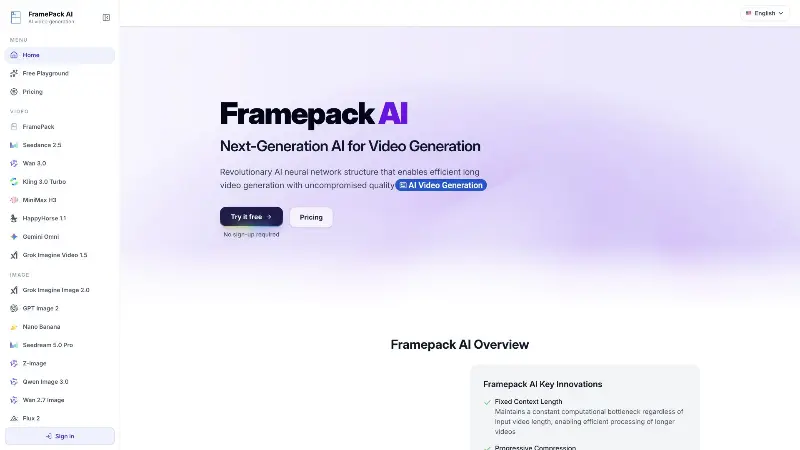 FramePack AIFramePack AI is an online workspace for AI video and image generation, with multiple modelsAI Video CreationAI Design ToolsAI Productivity ToolsDesignAIVideo
Reviews
See what the community thinks and share your experience.
—
Based on 0 ratings
Rating distribution
Community reviews
No reviews
No written reviews yet.